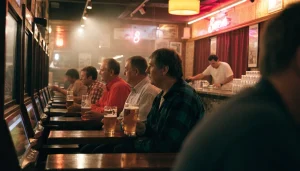
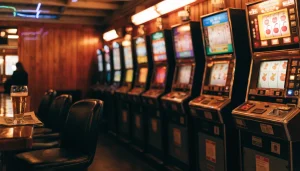
General venue hours may not reflect gaming-area access, so current, venue-specific confirmation matters when checking Canberra pokies.
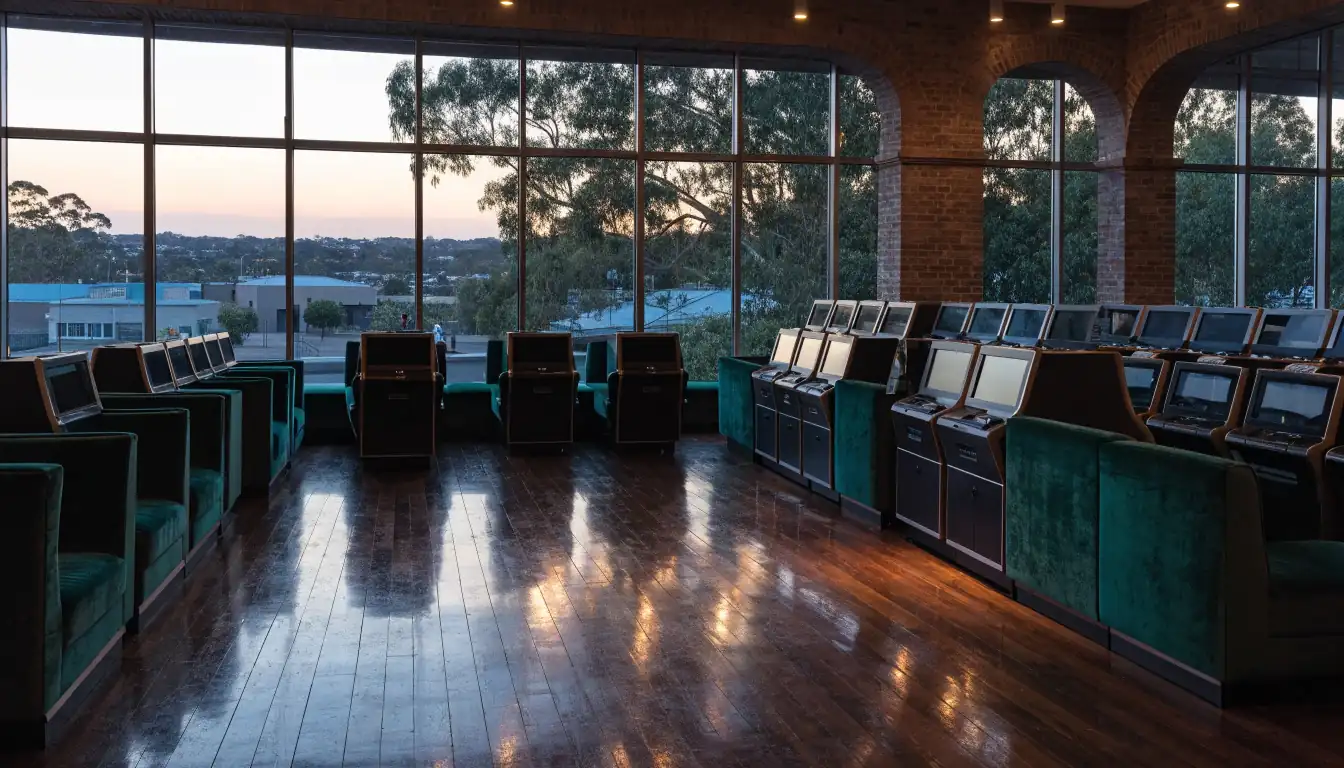
A request for Canberra pokies that are open now is about a specific venue’s present operating status, not simply whether pokie venues exist in the city or are permitted to operate. That distinction matters: a venue’s usual schedule, where one is published, does not confirm that its gaming area is open at a particular moment.
The same caution applies to searches for early or late access, including whether a venue is open at six or seven in the morning. A time that appears in a general listing may describe reception, dining or another part of a venue rather than access to pokies. Even a published schedule can become outdated or fail to reflect a temporary change. A dependable answer needs to relate to the named venue and the relevant date and time; a broad statement about Canberra would not establish that.
“Open” can also mean different things. A building may be accessible while its gaming area is closed, or a gaming area may operate on a schedule that differs from the venue’s other facilities. Without a current, venue-specific confirmation, those possibilities cannot be resolved for any particular Canberra location. It would therefore be misleading to treat an unqualified opening claim as proof that pokies are available at the time in question.
Choosing pokies to play in Canberra means weighing what each operator can actually confirm about its service. This reference highlights the available licensing and payment details to help you assess the options.
Roby Casino
Roby Casino is listed with a Curacao eGaming license held by Roby Games Ltd.
7Bit Casino
7Bit Casino is listed as operating under a Curacao license, with Dama N.V. as its operator.
WinSpirit Casino
WinSpirit Casino lists a Curacao eGaming license issued to Antillephone N.V. Its stated minimum deposit is A$30.
SkyCrown
SkyCrown lists a license from the Tobique Gaming Commission. Its stated payout times are around 10–15 minutes for crypto and 1–5 days for fiat.
JustCasino
JustCasino is listed with a Curacao Gaming Control Board license.
Golden Pokies
Golden Pokies is listed with a Curacao license.
LuckyVibe
LuckyVibe lists a Curacao Gaming Control Board license, OGL/2023/176/0095, held by Hollycorn N.V.
Thor Casino
Thor Casino lists a Curacao license associated with Antillephone N.V. and Versus Odds B.V. Its stated minimum deposit is EUR 20.
DragonSlots Casino
DragonSlots Casino lists a Curacao Gaming Authority license, with Jumpman Gaming Ltd named as the licensee.
Vegaz Casino
Vegaz Casino lists a Curacao license, OGL/2024/1335/0780. Its stated minimum deposit is EUR 20.
General operating requirements are not a substitute for venue hours. A report by regionriverina.com.au describes a requirement commencing on 1 July: venues with more than 20 gaming machines are to have a dedicated responsible gambling officer (RGO) present while those machines are operating. This concerns staffing during machine operation. It does not state when a venue opens, establish that any Canberra venue meets the machine threshold, or confirm that a particular gaming area is operating now.
The practical distinction is between a rule that applies if machines are running and evidence that they are running at a specific place and time. The RGO requirement does not create a citywide opening schedule. Nor does it establish that a venue is open continuously or that its pokies can be accessed whenever other services are available. A compliance condition should not be read as a timetable.
For that reason, a general answer to whether Canberra pokies are open now cannot stand in for a location-specific answer. A current status claim would need to identify the venue and distinguish its gaming area from the rest of its premises. A stated opening time would also need to be tied to the relevant day, since a schedule alone does not verify an exception or a change on that day.
The wording of an opening claim should be read narrowly. “Open” may refer to a venue’s doors, its hospitality services or its gaming facilities; these are not interchangeable. Similarly, a published regular schedule indicates planned hours, not necessarily real-time availability. None of these general descriptions can establish that a particular set of pokies in Canberra is available at the moment of inquiry.
This distinction is especially important when the question concerns a specific early-morning or late-night time. A city-level statement cannot confirm access at that hour, and the RGO rule does not answer it. The rule is conditional on machines operating and applies to qualifying venues; it does not require every venue to operate at any particular hour. It also cannot be used to infer that machines are running simply because the required officer would need to be present during operation.
This is not evidence that every venue is closed. It means that a claim of present access must be supported by current information for the particular venue, rather than inferred from general rules or an undated schedule.
A pokie’s title, a venue’s name or a label such as “best paying” does not, by itself, establish what return setting is in use. Return to player (RTP) is a game setting expressed as a percentage, but the same title may not have one universal setting across every installation. A specialist review has reported that some game providers let casinos choose among multiple RTP settings for a particular pokie. That reported arrangement makes the game name an incomplete basis for comparing returns.
Attention: A game's title or a venue's label does not establish its return setting, as providers may allow casinos to choose among multiple RTP settings for the same pokie.
The distinction matters when a title is described as having a particular RTP. That figure may relate to one configuration, rather than every version carrying the same name. A venue label cannot resolve the question either: it does not identify the game configuration selected for a machine. Without evidence tied to the specific installation and setting, a comparison based only on a familiar title or a venue category risks treating unlike configurations as equivalent.
This limits what can responsibly be said about the best-paying pokies in Canberra. A claim about a game’s return needs to be connected to the relevant configuration, rather than inferred from its name. A ranking based on title alone would therefore risk presenting a setting-specific figure as if it applied universally. The same caution applies to comparisons between machines associated with the CBD and those elsewhere: location does not establish the RTP setting.
RTP also does not describe the result of an individual spin. Each spin is generated independently by a Random Number Generator (RNG), so the outcome of an earlier spin does not determine the next one. A run of wins does not establish that a machine is more likely to pay again, and a sequence of losses does not mean that a win is now due. The independence of outcomes is central to interpreting any discussion of returns: a percentage cannot be used as a forecast for the next play.
The practical distinction is between a game-level setting and a short sequence of outcomes. An RTP figure, where reliably linked to the specific configuration, can support a comparison of stated settings. It cannot explain what will happen in a particular session. Nor does a venue’s reputation or a machine’s recent results establish its current configuration or predict its next outcome.
For searches about Canberra pokies, this separates two questions that are often blended together: which titles are available, and what return setting is attached to a particular installation. A title may be recognisable across venues while its configuration differs. Conversely, two machines with different titles cannot be ranked reliably from their names alone. The relevant comparison requires information about settings, not an assumption that a title carries an identical return everywhere.
Terms such as “best paying” can therefore overstate what a title or venue description proves. A defensible comparison would need to identify the configuration to which the stated RTP applies and avoid treating that figure as a promise of session-level results. Without that connection, a percentage may appear precise while leaving unresolved whether it describes the machine being compared.
The RNG principle also rules out common interpretations of patterns. A machine does not accumulate an obligation to pay after losses, and a previous win does not create evidence of a higher chance on the next spin. Each outcome is separate, even when a sequence looks patterned to an observer. For that reason, past results cannot substitute for information about a game’s selected RTP setting.
The narrow conclusion is that a game name can identify a title, but not necessarily the return configuration in use; a venue label adds no setting information on its own. Even a correctly matched RTP figure describes a setting, not a guaranteed result for an individual spin or playing session.
A Canberra location does not change the national rules for real-money online pokies. Under the Interactive Gambling Act 2001, providing online casino-style games, including pokies, to people in Australia is prohibited. No Australian licence has been issued for an online casino, so there is no locally licensed online casino market.
Legal Risk
Under the Interactive Gambling Act 2001, providing online casino-style games to people in Australia is prohibited, and players have no legal recourse in Australia if an offshore operator refuses to pay winnings.
The legal distinction is between the operator and the person playing. The law targets companies that provide prohibited services; it does not make an individual player liable simply for using an offshore site that accepts Australians. That distinction does not make an offshore service lawful in Australia, nor does it provide the protections associated with an Australian-licensed online casino. There is no such licensed casino.
The Australian Communications and Media Authority (ACMA) enforces the Act and blocks access to illegal offshore gambling sites. Internet service providers must comply with ACMA’s blocklist. Blocking is a regulatory measure directed at access to prohibited services; it should not be read as evidence that every offshore site is blocked at every moment or that a site remains available because it can be reached. The legal position is determined by the law, not by whether a particular page loads.
The most consequential limitation concerns disputes over money. If an offshore casino refuses to pay winnings, an Australian player has no legal recourse in Australia against that operator. A site’s willingness to accept Australian customers does not create an Australian licence, domestic oversight or a local route to enforce a payout claim.
This is distinct from the question of whether the player has committed an offence. The law’s focus on operators means that player liability and practical protection are separate issues: a player is not criminally liable merely for playing, but may still be unable to recover winnings through Australian legal channels if an offshore operator withholds them. The absence of player liability should therefore not be mistaken for a guarantee of payment or a remedy when a dispute arises.
Promotional wording, including claims about no-deposit offers or high limits, does not alter the status of the service providing the game. Nor does a payment method establish that an operator is licensed, supervised in Australia or accountable to an Australian regulator. The relevant distinction remains whether a company is providing a prohibited online gambling service to people in Australia.
BetStop is an Australian self-exclusion service, but it applies only to Australian-licensed operators and does not bind offshore sites. Because no Australian-licensed online casino exists, BetStop should not be treated as a safeguard against access to offshore online pokies.
The legal framework thus gives a clear answer on the division of responsibility, but not a local remedy for offshore payment disputes. Online pokies presented as available to people in Canberra remain part of the same national legal setting: operators are prohibited from providing them to Australians, while an individual player is not criminally liable merely for playing. That combination is not equivalent to a regulated domestic service, and an offshore site’s acceptance of Australian customers cannot supply the missing Australian legal protection.
A request for pokies near Canberra Airport is a question about a specific place, not evidence that machines are inside the terminal or within a particular distance of it. The same distinction applies to searches for the Canberra CBD, North Canberra or another neighbourhood. A location in a search phrase does not establish that a venue exists there, that it has pokies, or that it is close to the named landmark.
Proximity to landmarks like the Canberra Airport or CBD can only be verified when both the venue's address and the destination are established.
Proximity can be assessed only when a venue’s address and the relevant destination are both established. Without those details, describing a club or hotel as “near” the airport, the CBD or a suburb would create an impression of geographic accuracy that cannot be supported.
The phrase “near me” is especially dependent on context. It refers to a person’s current position, which may be in the airport precinct, the city centre or elsewhere in the region. A result that appears relevant to one location may not be close to another. The term “near” also has no fixed distance built into it: a venue might be described that way in a broad regional sense while being inconveniently far from the intended destination.
The spelling “Canberra, Vic” introduces a further location ambiguity. Canberra is in the Australian Capital Territory, while “Vic” commonly abbreviates Victoria. A result that combines those terms should not be treated as proof of a venue in Canberra; the place and state or territory need to be read together and checked for consistency.
For a precise location claim, the minimum useful information is a confirmed venue address and a clearly identified point of reference. Distance should then be described in a way that makes the comparison understandable, rather than relying on an unqualified label such as “near.” Even an accurate address would establish location only; it would not, by itself, confirm that pokies are available at the venue.
Accordingly, airport, CBD and north-side references should be treated as geographic descriptions requiring confirmation, not as venue recommendations or evidence of machine availability. A search phrase can indicate what area someone has in mind, but it cannot substitute for a verified address or establish that a particular place offers pokies.
A venue’s suitability cannot be established by its machines or location alone. For Canberra venues, a meaningful assessment would also require reliable information about how gambling-related risks are identified and managed.
A report published by regionriverina.com.au describes a requirement taking effect from 1 July: venues operating more than 20 gaming machines are to have a dedicated responsible gambling officer (RGO) on duty whenever those machines are running. The threshold concerns the number of machines at a venue, while the duty requirement is tied to their operation. It should not be read as evidence that every Canberra venue has an RGO, or that the rule applies to venues below that threshold.
The role matters because a responsible gambling officer provides a designated point of oversight in the venue. The reported requirement is specific about when the officer must be present; it does not, by itself, establish what actions an officer has taken at a particular venue or how effectively the venue responds to signs of harm. Those questions require venue-level evidence rather than an inference from a general rule.
The same report says venues will be required to maintain a gambling incident register. It is intended to capture occurrences that may indicate a patron is at risk of gambling harm or is already affected by it. Such a record-keeping obligation creates a formal means of documenting relevant incidents; it does not establish how often incidents occur, what intervention followed, or whether a particular venue’s procedures are effective.
These distinctions are important when comparing pokies venues in Canberra. A general description of a regulatory requirement is not proof of local implementation. Nor does a venue’s public profile establish whether it falls within the machine-count threshold, whether the relevant officer is on duty when machines operate, or whether incidents are recorded in the required way. Those points need confirmation from reliable information about the individual venue.
The reported measures provide a limited basis for evaluating oversight: an applicable venue has a defined staffing obligation, and incident recording is part of the described framework. They do not support a ranking of Canberra venues or a claim that one offers stronger protections than another. A comparison would need evidence of each venue’s status and practices, rather than relying on general descriptions of responsible gambling.
A venue’s opening hours and the hours when its pokies are operating are related, but they are not interchangeable. A claim of “24-hour pokies” would mean that machines are available throughout the day and night; it does not, by itself, establish that a particular venue is open around the clock. Likewise, a venue’s stated opening hours would not alone confirm that pokies can be used throughout every part of that period.
The distinction matters when assessing claims about Canberra pokies hours. A listing or description can use “24-hour” loosely, so the wording needs to be tied to the specific service it describes. It may refer to a venue’s general access, rather than confirming continuous machine operation. Without a reliable schedule for a named venue, neither interpretation should be treated as proof that pokies are available at a particular time.
A separate operational requirement concerns responsible-gambling oversight, not opening times. A report by regionriverina.com.au describes a rule taking effect from 1 July under which venues operating more than 20 gaming machines are to have a dedicated responsible gambling officer (RGO) on duty while those machines are running. The condition is linked to machine operation: it does not set a venue’s opening schedule or establish that machines operate continuously.
That requirement therefore cannot be used to infer that a venue is open, or that its machines are available, at any particular hour. Nor does a venue’s stated schedule establish whether the RGO requirement applies; the reported threshold concerns the number of machines and the period in which they are operating.
For searches about whether Canberra pokies are open now, the decisive detail is a current, venue-specific schedule that clearly covers machine availability. General references to late-night service or round-the-clock access are not a substitute for that detail. The same distinction applies to opening-hours listings: they can describe when a venue admits patrons without demonstrating that pokies are operating for the full period.
Accordingly, “24-hour availability” should be read as a precise claim requiring confirmation, not as a general description of Canberra venues. The operating rule reported by regionriverina.com.au concerns staff oversight when machines are in use; it does not convert that condition into a promise of uninterrupted access.
A reference to Crown in connection with Canberra does not, by itself, establish that a Crown-branded venue operates in the city or that Crown pokies are available there. A brand name, a venue name and the location of a particular machine are separate claims. Each would need location-specific support before it could be treated as established.
The same distinction applies to descriptions of a “pokies room”. That phrase may suggest a dedicated gaming area, but it does not identify a particular Canberra venue or confirm what machines are installed there. Nor does a general reference to Crown establish that a room exists, that it is open, or that it offers any particular game. Those details should not be inferred from the wording of a listing or from a brand association alone.
A claim that a Crown casino in Canberra has pokies therefore requires more than the appearance of the name Crown alongside the city. Reliable identification would need to connect the named venue to a Canberra address and support the specific claim about its machines. Without that link, presenting the venue or its pokies as local would risk turning an unverified association into a factual description.
The same caution applies to requests for the best pokies room in Canberra. “Best” depends on a stated basis for comparison, and no ranking follows simply from a venue’s name or branding. A useful comparison would need confirmed venues and comparable information about the features being assessed. Without that foundation, a ranked recommendation would imply a level of local knowledge that is not established.
A maximum cash payout is also a distinct question from whether a machine or venue exists. No payout figure can be assigned to Crown-branded pokies in Canberra on the basis of the name alone. A number presented without a confirmed machine and applicable terms would be misleading, rather than a meaningful answer about a local payout limit.
Accordingly, Crown should not be treated as a verified Canberra pokies destination on the strength of the name alone. The distinction is narrow but important: a search result, label or brand reference may prompt an enquiry, yet it does not establish a venue, a machine list, a ranking or a cash-payout ceiling. Claims about any of those matters require specific supporting details rather than an inference from branding.
Club searches in Canberra’s central business district can bring together two different issues: where pokies are available and what responsible-gambling measures apply inside venues. The relevant signage and staffing rules do not identify a particular club or establish that pokies are present at a specific CBD location. They describe requirements for venues, rather than a directory of local machines.
A report by regionriverina.com.au described a one-month grace period for venues to remove signage and introduce responsible gambling officers (RGOs). The period was presented as time for venues to make those changes, not as evidence that every club had completed them or that a particular Canberra venue was covered. Nor does the report establish the current signage or staffing arrangements at any named club.
The placement of signs matters independently of that transition period. Signage directing patrons to gaming lounges must be removed if it is within eyeshot of ATMs or EFTPOS terminals. Signs directing patrons to ATMs must also be removed when they are within eyesight of gaming machines. These are specific restrictions on the relationship between signs and nearby facilities; they do not amount to a general description of every sign a venue may display.
The distinction is relevant to searches for pokies in Canberra’s CBD because a club’s presence, a machine’s location and compliance with signage rules are separate questions. A sign’s presence or removal cannot establish that a venue has pokies, and a venue’s compliance cannot establish that its machines are open or available. The grace period described in the report should therefore be understood as a reported implementation window, not as a current status check for CBD clubs.
Self-exclusion is also distinct from signage. It is a responsible-gambling tool, but a reference to it does not show that a particular club offers a specific process or that a patron has been excluded across all venues. The signage rules address what venues may direct patrons toward in defined locations; they do not, by themselves, explain how self-exclusion is administered.
A reference to Parkes in connection with Canberra does not, by itself, establish that a venue with pokies operates there. A place name can identify the area a person has in mind, but it is not evidence of a particular club, hotel or gaming room, nor of machines at a specific address.
That distinction matters when assessing claims about the best pokies in Canberra. A game or venue cannot be evaluated locally without first establishing that the venue exists at the stated location and that pokies are available there. Without that identification, comparisons between Parkes and other Canberra areas would rest on an unconfirmed premise rather than on a verifiable local choice.
The name can also refer to different places, so the intended location should be clear before treating a Parkes result as relevant to Canberra. Even where a listing uses a Canberra label, that wording alone does not confirm an address, operating status or the presence of pokies. Those details need to be established independently before a venue can be described as a Parkes option.
Nor does it establish that any venue is open, has particular machines or is suitable for comparison.
For a location-specific assessment, the relevant details would be a clearly identified venue and an address that places it in the intended Parkes area. Claims about machines or current availability would then need separate confirmation. Until those elements are established, describing Parkes as a place with a particular pokie venue would go beyond what can responsibly be concluded.
“Cashless” describes how a venue’s machines or other services accept payment; PayID describes a way to transfer money between bank accounts. The terms are not interchangeable. A venue offering cashless pokies would need to confirm that its machines support a cashless payment method. The existence of PayID in Australia does not establish that any particular Canberra venue has that facility.
PayID works as an alias layer on the New Payments Platform (NPP). A transfer can be addressed using an email address, mobile number or Australian business number (ABN), rather than relying on bank-account details. The NPP is available through all major Australian banks and uses end-to-end encryption. Those features describe the transfer network; they do not tell whether a physical pokie accepts PayID, or whether a venue has introduced cashless play at all.
This distinction also matters when a payment method is discussed in relation to online services. A transfer option does not, by itself, establish that a service is legally authorised, that a game is fair, or that its return-to-player setting is disclosed. Payment infrastructure and gambling regulation are separate questions, as are payment acceptance and game configuration.
The same caution applies to location-based claims. A reference to cashless machines in Canberra requires confirmation about the specific venue and its payment arrangements. Combining Canberra and Newcastle in a search does not establish that the same facilities exist in both places, or identify a venue in either city. PayID’s nationwide banking availability cannot fill that location-level gap.
Australians can legally play on offshore sites that accept them, but the Interactive Gambling Act 2001 prohibits companies from offering real-money online pokies to Australians without a domestic licence, and no such licences have been issued. Players have no legal recourse in Australia if an offshore casino refuses to pay winnings.
You must be at least 18 years old to gamble online in Australia.
There is no Australian-licensed online casino, and Australian players have no legal recourse in Australia if an offshore casino withholds winnings. ACMA blocks access to illegal offshore gambling sites, but that does not guarantee the safety of a site that accepts Australian players.
Compare the bonus with its wagering requirement: for example, a $500 bonus at 40x requires $20,000 in bets before you can withdraw winnings. If the requirement applies to a $500 deposit plus a $500 bonus at 35x, you must wager $35,000; also check whether free-spin winnings are capped.
It is the turnover multiplier that determines how much you must bet before bonus winnings can be withdrawn. For example, a $500 bonus with a 40x requirement means $20,000 in bets.