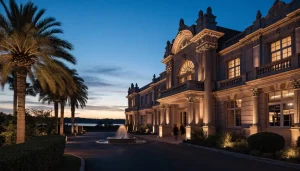
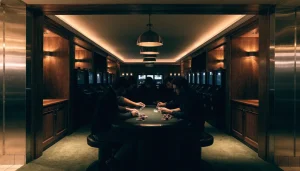
Hotel names do not confirm a casino connection, and room labels such as deluxe or suite vary by property.

A hotel described as part of, or associated with, a Melbourne casino should be assessed as a specific property rather than treated as interchangeable with other hotels nearby. The name used in a listing does not by itself establish that rooms are inside the casino complex, operated by the same business, or connected to its facilities. Before making a reservation, the property’s official description should clarify the relationship and give the hotel’s address.
Room categories also need to be read as the hotel defines them. Labels such as standard, deluxe, suite or view room are not consistent measures across properties. A higher category may refer to floor level, room size, layout or outlook, but these features should not be inferred from the label alone. The room description and booking conditions are the relevant basis for comparing options. Where a casino hotel listing does not explain what distinguishes its rooms, the distinction remains unclear.
A comparison of Melbourne casino hotel rooms is more useful when it separates the room itself from optional services. Details worth checking include the bed configuration, permitted occupancy, bathroom arrangement, accessibility features and whether the stated room layout matches the needs of the booking party. Images can help identify a room’s general appearance, but they do not establish which exact room will be assigned. The written description and any selection made during booking should therefore be considered alongside photographs.
Choosing a casino for Melbourne in 2026 calls for a look at the details that are available, rather than relying on a name alone. This list highlights each operator’s stated licensing information and, where provided, practical details such as minimum deposits or payout speed.
Roby Casino
Roby Casino is listed with a Curacao eGaming license held by Roby Games Ltd.
7Bit Casino
7Bit Casino is licensed in Curacao and operated by Dama N.V.
WinSpirit Casino
WinSpirit Casino lists a Curacao eGaming license, OGL/2024/923/0383, under Antillephone N.V. Its stated minimum deposit is A$30.
SkyCrown
SkyCrown lists a license from the Tobique Gaming Commission. Its stated payout times are around 10–15 minutes for crypto and 1–5 days for fiat, with a minimum deposit of A$30.
JustCasino
JustCasino lists a license from the Curacao Gaming Control Board.
Golden Pokies
Golden Pokies is listed with a Curacao license.
LuckyVibe
LuckyVibe lists a Curacao Gaming Control Board license, OGL/2023/176/0095, under Hollycorn N.V.
Thor Casino
Thor Casino lists a Curacao license from Antillephone N.V., with Versus Odds B.V. as the operator. Its stated minimum deposit is EUR 20.
DragonSlots Casino
DragonSlots Casino lists a license from the Curacao Gaming Authority, with Jumpman Gaming Ltd.
Vegaz Casino
Vegaz Casino lists a Curacao license, OGL/2024/1335/0780. Its stated minimum deposit is EUR 20.
The total cost should also be evaluated against the reservation terms, not just the headline rate. A displayed price may depend on travel dates, room category and the booking conditions selected. Cancellation rights, payment timing, amendments and any stated additional charges can affect the practical value of a deal. These terms can differ between offers for the same property, so a lower price is not necessarily a like-for-like comparison if it comes with stricter conditions. The final booking summary is the clearest place to confirm what has been selected and what is included.
For a stay connected with casino facilities, the nature of that connection matters. A hotel may be within a larger complex, linked by access routes, or simply marketed as being close to a casino; these arrangements are not equivalent. The property’s own information should specify whether the casino is on site and what access, if any, is available to hotel guests. No assumption about entry, services or guest privileges follows from the word “casino” in a hotel name or description.
Hotel deals should be checked for the dates and room type to which they apply. A promotion may have conditions relating to availability, length of stay, advance booking or cancellation. Those conditions determine whether an offer is usable for a particular trip. If an advertised rate cannot be matched to a clear room category and set of terms, it is difficult to compare it reliably with another rate. Keeping the reservation confirmation also helps establish the booked dates, room type and conditions if details later need to be checked.
Opening information for a hotel and operating hours for casino facilities are separate matters. A hotel booking does not, by itself, establish when a casino floor or another venue within the complex is open. Such hours can be time-sensitive and should be confirmed through the relevant venue’s current information before travel. This distinction is especially important where a stay is planned around access to a particular facility.
The phrase “casino hotel in Melbourne” can describe different arrangements, so the central checks are property identity, room specification, total price and booking conditions. Without current property details, no particular room, deal or guest benefit can be reliably represented as available. A careful comparison rests on the hotel’s own current listing and the terms shown at the point of reservation.
A search for poker at a Melbourne casino can refer to two different activities: a live game at a physical venue or online poker played through an internet service. The distinction matters because Australian law treats online casino-style poker differently from an in-person casino visit. Under the Interactive Gambling Act 2001, operators cannot provide real-money online poker to people physically located in Australia. This restriction concerns the service offered by the operator; it should not be confused with information about a venue’s live poker arrangements.
Legal Restriction
Under the Interactive Gambling Act 2001, operators cannot provide real-money online poker to people physically located in Australia.
Poker-room and tournament details are specific to the venue and can change. A tournament announcement is most useful when it identifies the event date, registration arrangements, game format, entry conditions and applicable rules. A listing that omits these details may not establish whether an event is running or what participation involves. Event names alone are not enough to infer the structure of a tournament, the length of a session or the availability of places.
The term “poker room” can also be used loosely. It may refer to a designated area for live poker, rather than a hotel room or a general casino gaming floor. Similarly, “casino rooms” may describe accommodation rather than a poker facility. Separating these meanings helps prevent hotel information from being mistaken for confirmation of a live poker service.
Tournament information should be read as event-specific rather than as a standing schedule. A recurring title does not, by itself, establish that a particular session is taking place on a given day. Nor does the presence of a tournament listing confirm that cash games are available, or that every poker format is offered. Those are separate operational details and need to be stated independently by the venue.
The same distinction applies to poker and other casino activities. Poker is a card game with its own rules and event formats; it is not another name for pokies or Electronic Gaming Machines (EGMs). Information about the number or type of gaming machines would not establish anything about poker tables, tournament registration or seating. A sports bar is a separate hospitality query, not evidence of a poker room or poker event.
For someone comparing Melbourne casino poker tournaments, the relevant details are therefore the event’s own terms: the game being played, how entry is handled, the schedule and any eligibility requirements. A venue-wide opening notice does not necessarily confirm that a poker room is operating or that a scheduled tournament has not changed. Likewise, a tournament notice should not be treated as general confirmation of all casino facilities.
Online poker deserves particular care in this context. The Interactive Gambling Act 2001 prohibits Australian-based operators from supplying real-money online casino games, including poker, to customers in Australia. A physical poker room and an online poker platform are not interchangeable options, and details about one do not establish the legal status or availability of the other. This distinction is relevant whenever “poker at Melbourne casino” is used to mean either an in-person game or an online service.
A reliable description of a live event needs to make clear that it is a physical, venue-based offering and set out its current conditions. Without that specificity, a general reference to poker or a tournament cannot establish the room’s operating arrangements, the event format or whether registration is open. The practical point is to treat poker-room access, tournament participation and online poker as separate questions rather than assuming that one listing answers all three.
Parking arrangements can affect the practical side of a visit to a Melbourne casino, but availability, charges and access conditions should not be assumed from older listings. Before travelling, check the venue’s current official parking information and confirm that it applies to the intended visit. A map entry or a past visitor comment may not reflect changes to access routes, operating arrangements or prices.
Parking Verification
Visitor parking availability, charges, and access conditions should be confirmed through the venue's current official information, as older listings or map entries may be outdated.
The details worth confirming include whether visitor parking is available, where the entrance is, whether parking is paid or complimentary, and whether any discount or validation applies. These conditions can differ, so “free parking” should not be treated as a standing feature without current confirmation. If a vehicle has height or access requirements, check the relevant restrictions before setting out rather than relying on a general map listing.
Valet parking is a separate service from self-parking. Its availability, location, operating times and cost require direct confirmation with the venue; the existence of a casino does not establish that valet service is offered. The same applies to accessible parking, vehicle clearances and any temporary arrangements that may affect the route into the property. Current signage and venue instructions take precedence over third-party descriptions.
For anyone comparing travel options, it is useful to distinguish the parking question from searches about dining, bingo or online play. Those topics concern different services and do not establish anything about the current parking conditions. Planning should therefore be based on the particular service being used and the venue’s up-to-date visitor information, rather than on a broad label such as “casino parking”.
A physical casino in Melbourne and an online casino are legally different forms of gambling. The Interactive Gambling Act 2001 prohibits operators from providing real-money online casino games to people in Australia. The restriction covers games such as pokies, blackjack and roulette when supplied online by operators based in Australia. It does not mean that a land-based visit is the same activity as accessing an online casino.
Offshore platforms are not regulated under Australian law, and the legal position for operators should not be confused with a general endorsement of those services. The fact that an offshore site can be encountered online does not make it an Australian-licensed casino or establish that its games are lawfully offered to people in Australia. Online casino gambling should not be presented as an alternative way to visit a Melbourne venue.
Region blocking can prevent access to games or services from an Australian internet connection. Using a VPN to get around a restriction may breach the operator’s terms and can lead to account suspension. It also does not change the underlying legal status of an online service. Searches for a Melbourne casino online should therefore be interpreted carefully: a website associated with gambling is not necessarily the same as the physical venue, and online access does not confer the protections or conditions of an in-person visit.
For a trip by car, the reliable next step is to verify the venue’s current parking directions, charges and service conditions through its official visitor information before departure.
Staying near a casino can mean choosing a separate hotel, serviced apartment or other short-stay property in the surrounding area, rather than booking a room at the venue itself. These options differ in room type, services, booking conditions and distance from the entrance. A property described as “near” may still require a walk or a separate journey, so proximity is best assessed by checking its address against the casino’s location and considering the actual route.
For a useful comparison, the relevant details are not limited to the nightly rate. The total cost may depend on the dates, room type, length of stay and booking conditions. Whether breakfast, cleaning or other services are included also varies by property and rate. Cancellation rules and payment terms can affect the value of an apparent discount, particularly when plans are not fixed. An accommodation deal should therefore be assessed against its full conditions, not just a headline price.
The type of stay matters as well. A hotel room may suit a short visit, while an apartment-style property may offer a different layout or facilities. Those features cannot be assumed from the property category alone: the room description and booking terms determine what is included. It is also worth distinguishing accommodation promotions from casino promotions. A discounted room rate is a lodging offer; it does not establish that gaming offers are available or that a particular promotion applies to the stay.
Distance is more informative when considered in practical terms. A map can show the property’s position relative to the casino, but the walking route, street access and route conditions may affect how close it feels in practice. For a stay involving late departures or luggage, the route and available transport may matter as much as the straight-line distance. These considerations do not establish the casino’s opening times or provide parking information; those are separate matters requiring their own checks.
Searches for Melbourne casino accommodation may refer either to rooms inside the venue or to independent places to stay nearby. Keeping those categories separate makes comparisons clearer. A room at the casino is part of the venue’s accommodation offer, whereas a nearby property is an alternative base whose facilities and terms are set by its own operator. Neither category should be treated as interchangeable without checking the specific booking details.
Availability and rates can change with travel dates and demand. The same property may show different room types or conditions across dates, and a rate seen at one point may not remain available. A sound comparison uses the intended dates and checks the final price and conditions before booking. This also helps distinguish a genuinely suitable nearby stay from one that appears attractive only because its location, inclusions or restrictions have not yet been considered.
For visitors comparing accommodation near the Melbourne casino, the practical decision is therefore a combination of location, route, room features and booking terms. The casino’s location provides the reference point, but the property address and the route between them determine the real relationship. Current listings are the appropriate basis for checking availability and price; a general description of the surrounding area cannot establish either for a particular stay.
A reliable contact route begins with confirming the venue’s identity. “Melbourne casino” can refer to a specific land-based destination, but abbreviated labels in map listings, directory entries and social posts may not identify the operator or the department being contacted. The venue’s own website is the appropriate starting point for its current address and published contact channels. If a number appears in a third-party listing, it should be checked against that official information before being used.
Contact enquiries are more likely to reach the right team when they specify the subject. Questions about general entry, accessibility, lost property, bookings or a particular service may be handled by different departments. A published switchboard can direct an enquiry, while a dedicated contact form may be more suitable for matters requiring written detail. For time-sensitive questions, the relevant department’s current contact method is preferable to an old directory entry; listings can remain online after details change.
Attention: Third-party mapping services may show nearby businesses or transport points that are not actually part of the casino complex.
A map should be treated as a planning aid rather than confirmation that every pin or label is current. The venue’s own map, where provided, can help distinguish entrances and internal areas. Third-party mapping services may show businesses, bars or transport points nearby without establishing that they are part of the casino. The location of a car park, its access arrangements and any associated charges are separate details that should be checked through the venue’s current information before travel.
Queries about baccarat or craps also require a distinction between a game’s general availability and its presence at a particular venue. A game name in a directory or an old promotional listing does not confirm that a table is operating, or that it will be available at a specific time. The same applies to a casino bar: a map marker may refer to a nearby business rather than an on-site venue. Current venue information is the sounder basis for confirming location, service and entry conditions.
Concert listings are similarly time-sensitive. A ticketing page or event announcement can clarify whether an event is associated with the casino, where it is held and which organiser manages tickets. The venue’s general contact channel may not handle ticket changes or event access, so the organiser’s stated contact details should be used for those matters. Event schedules and venue opening information are not interchangeable: an event listing does not, by itself, establish the hours of every casino facility.
Dress expectations can vary with the area, event and time of visit. Where clothing requirements matter, the relevant venue policy or event conditions should be checked directly rather than inferred from photographs or informal comments. Confirmation is especially useful when an event has its own entry rules.
The distinction between online gambling and a physical venue is also important when interpreting casino-related listings. Under the Interactive Gambling Act 2001, operators are prohibited from providing real-money online casino games, including pokies and table games, to people in Australia. A land-based venue’s contact details or map location do not establish that an online casino service is lawful or connected to it.
Breakfast, buffet and resort-related searches can describe different parts of a casino visit. A breakfast service may be offered by a hotel, a café or another dining venue, while a buffet is a separate format with its own service details. The phrase “Melbourne casino breakfast” does not, by itself, establish which venue is involved or whether a meal is included with a room, a booking or a rewards benefit. Those distinctions matter when comparing options.
For a breakfast or buffet visit, the relevant details are the venue name, service period, menu format, booking conditions and any price or inclusion terms displayed for the intended date. A buffet listing should be checked for what the meal includes and whether its terms differ from other dining offers. A general resort description is not evidence that breakfast is part of a particular stay. Current venue information is the appropriate basis for making plans, since services and conditions can change.
The same care applies to searches for a Melbourne casino buffet breakfast. The words may refer to a specific meal service, a general buffet, or a package combining food with another service. A listing should therefore be read in full rather than inferred from a headline. Where rewards are mentioned, the applicable program terms determine whether a benefit applies, what conditions attach to it and whether it is relevant to the particular booking or visit. A rewards label alone does not establish eligibility or value.
A breakfast or buffet visit requires checking the venue name, service period, menu format, and booking conditions for the specific date. Rewards benefits depend on the applicable program terms and do not guarantee eligibility or value.
Searches for jobs at a Melbourne casino concern a different subject from visitor services. Casino employment can involve distinct functions, and the organisation advertising a vacancy may not be the same as the venue operator. Job descriptions should be assessed by the named employer, duties, work location, employment conditions and application process. A role title alone is insufficient to establish what the work involves.
Recruitment information is time-sensitive. A vacancy may close, change or be withdrawn, so an old listing should not be treated as an active opportunity. The most reliable route is the relevant employer’s current careers information, with the advert checked for application instructions and any stated requirements. Third-party listings can help identify roles, but details should be confirmed through the organisation responsible for hiring before personal information is submitted.
The terms “casino job” and “casino resort jobs” can also point to different employers and workplaces. A resort may include businesses beyond casino operations, while a vacancy associated with a venue may be advertised by a service provider or another organisation. Checking the employer named in the listing helps distinguish these possibilities. Recruitment pages should be treated separately from hotel packages, food offers and rewards material: each addresses a different decision and has its own conditions.
For visitors, breakfast and buffet information is best assessed as a dated service listing, not assumed from the broader resort label. For prospective applicants, a current vacancy and its employer are the central evidence. Keeping those two purposes separate makes descriptions of meals, benefits and work opportunities easier to interpret without treating one as proof of another.
Whether the Melbourne casino is open on a particular date, and which areas or entertainment programmes are operating, cannot be established from a general venue description. Opening arrangements and event schedules can change, so a past listing or an undated review is not sufficient evidence of current availability. For a planned visit, the venue’s own current notices are the most relevant place to check; event listings should be read alongside any date-specific operating information.
A reopening announcement also needs to be interpreted carefully. The word can refer to a full return to operation, the resumption of a particular service, or a future proposal rather than a confirmed opening. Reports about casino development may likewise describe planning or construction rather than facilities already available to visitors. The status, timing and scope of any change should therefore be confirmed in a current venue announcement before it is treated as settled.
Event information is time-sensitive. A listing should identify the date and venue, and should make clear whether the programme is confirmed, postponed or cancelled. Where several entertainment spaces or event types are involved, a general event page may not establish that every part of the venue is operating as normal. A specific listing is more useful than an old article that refers broadly to entertainment at the casino.
The distinction between a scheduled event and a regular feature also matters. A performance or special programme may be offered on selected dates, while a venue’s ordinary opening status is a separate question. Details such as entry conditions, ticketing and any age restrictions should be checked against the current event information rather than inferred from previous editions.
Entertainment Schedules
Event listings are time-sensitive and should be checked for confirmation, postponement, or cancellation status independently of the venue's general opening hours.
A review can describe a visit at the time it was written, but it cannot by itself confirm present opening hours, event availability or reopening status. Reviews are most informative when their date and the scope of the visit are clear. They should not be used as a substitute for current operational notices, particularly where a venue’s arrangements may have changed.
For a useful overview, compare the date of each announcement with the date of the intended visit and distinguish confirmed information from proposals or retrospective coverage. If current venue communications do not specify whether the casino is open or whether an event is proceeding, the available information does not support a definite conclusion. The same caution applies to claims that a development has changed the visitor experience: a completed, operating change is different from a plan or announcement.
This approach keeps the main questions separate: whether the venue is operating, what entertainment is scheduled, and whether a reported development has actually taken effect. Each requires current, venue-specific confirmation.
Restaurant information is most useful when it identifies the venue, cuisine, current menu and service times. Those details can change, so a listing that gives only a restaurant name may not be enough to establish whether it suits a particular meal or visit. For the Melbourne casino, specific restaurant names, menus and hours should be confirmed through current venue information before plans are made.
A practical comparison begins with the type of meal being sought. A full-service restaurant is different from a quick-service food outlet, a buffet or a bar serving food. Keeping those categories separate helps avoid relying on a general dining description that may not match the intended experience. Breakfast and buffet searches are a separate matter; neither should be assumed to describe the casino’s restaurant offering.
Menu details also matter beyond cuisine labels. Published menus can indicate whether the kitchen offers suitable dishes, while allergen and dietary information may require direct confirmation if the consequences of an error are significant. A menu found on an older listing may no longer reflect what is served. The date of the information and whether it comes from the venue itself are therefore relevant when assessing its reliability.
Service times should be checked independently of general casino opening information. Restaurant kitchens can follow schedules that differ from those of the wider venue, and a dining listing does not by itself establish that a table or particular menu is available at a given time. The same applies to reservations, walk-in availability and special-event arrangements: these are operational details, not facts that can safely be inferred from the presence of a restaurant.
The phrase “restaurants at the casino” can also be ambiguous. It may refer to dining inside the venue, places in the surrounding district, or a broader collection of food options. These are not interchangeable categories. A restaurant elsewhere in Melbourne may be nearby without being part of the casino, while an outlet within the complex may have a different format from a conventional restaurant.
For anyone comparing Melbourne casino restaurants, the most dependable basis is current, venue-specific information covering the restaurant’s identity, menu, dining format and service arrangements. If any of those details cannot be confirmed, it is more accurate to treat them as unresolved than to infer them from an old directory entry or a general description of the complex. This distinction is particularly important where the plan depends on a specific cuisine, dietary provision or meal time.
A search for a spa at Melbourne’s casino does not, by itself, establish that a day spa operates within the venue or that spa treatments are available to casino visitors. Spa facilities may be associated with a hotel rather than the gaming venue, and the distinction matters when checking location, access, booking arrangements and service availability. Current venue information should identify the operator of any spa and whether appointments or hotel access are required. Without confirmation from a current, venue-specific source, no particular treatment, facility or opening schedule can be attributed to the casino.
The same care applies to the Melbourne casino address. Before travelling, confirm the venue’s full address against its current official listing, rather than relying on an old directory entry or a result that may refer to a hotel, office or another nearby business. The exact entrance can also matter within a large complex; directions for a hotel or event space should not automatically be treated as directions to the gaming floor.
Dress expectations are another detail that can vary by venue area or occasion. A general impression of what is acceptable should not be taken as a formal policy. Where a dress code is published, its wording should be checked for any distinctions between gaming areas, restaurants, bars and special events. If the policy is not clear, confirmation from the venue before arrival is more reliable than assumptions based on photographs or older visitor reports. Entry decisions remain subject to the venue’s current conditions.
Questions about bars, games and careers also concern different services. A bar listing does not confirm spa access, and descriptions of casino games do not establish the rules for other areas of the complex. Employment vacancies and application procedures should be checked through the venue’s current recruitment channel; they are separate from visitor information and may change independently.
For a practical visit, the useful checks are therefore specific: confirm the address and intended entrance, establish whether the spa is actually operating and who runs it, review any published access or booking conditions, and check the dress policy for the area being visited. These steps avoid treating a hotel amenity, an older listing or a general venue description as confirmation of a current casino service.
Food at a casino can refer to several different things: quick-service counters, takeaway, cafés, or full-service dining. A food court, where present, is generally the more casual option, but the label alone does not establish which outlets operate there, what they serve, or whether they are open at a particular time. Menus, trading hours and access arrangements can change, so current venue information is more useful than an old directory entry or a general description of the precinct.
The distinction matters when planning a visit. A food court may suit a brief stop between activities, while a restaurant involves a separate dining choice; neither should be assumed to cover every dietary need or service period. Specific claims about cuisine, prices, outlets or late-night availability require current confirmation rather than inference from the venue’s size or reputation.
Pool searches raise a different issue. A pool may be part of a hotel or leisure facility rather than a casino’s public gaming areas, and access can be subject to conditions such as guest status or facility rules. A pool’s existence should not be inferred from the presence of casino accommodation, nor should access be assumed for all visitors. Where swimming is an important part of a stay, the relevant venue’s current facilities information should identify whether a pool is available and explain any access conditions.
The same care applies to combining food and pool plans: dining access does not establish pool access, and pool access does not establish that food service is available nearby at the required time. Current official venue information is the appropriate basis for confirming both facilities before making arrangements. This keeps general expectations about casino food and leisure facilities separate from details that can vary by venue, operating arrangements and date.
It is a restriction that uses your IP address to identify your location and prevent access to certain games. From an Australian IP address, blocked games may not appear in the lobby or may fail to load.
Yes. The Interactive Gambling Act prevents Australian-based operators from offering online casino games such as pokies, blackjack and roulette to people in Australia. Offshore platforms are not regulated under Australian law, although it is technically not illegal for Australian players to use them.
Club Liverpool has the highest number of operational poker machines among clubs in NSW.