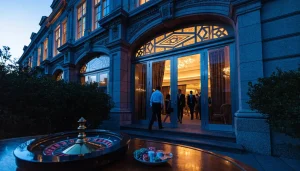
Coverage spans casino accommodation, gaming, dining and facilities, with a clear distinction between an on-site hotel and nearby lodging.

A casino hotel is accommodation that forms part of, or is directly connected to, a casino property. The defining point is the relationship between the rooms and the venue: an on-site stay places both within the same property or complex. A hotel elsewhere in the region remains a separate accommodation choice, even if it is described as close to a casino. The distinction matters because a shared name, promotional reference or short journey does not by itself establish that rooms are on the casino site.
For Western Australia, the phrase “casino hotel” should therefore be treated as a description to verify, not as proof of a particular room inventory or hotel arrangement. A reliable property description would identify the accommodation itself and explain its connection to the casino. Without that detail, a listing may refer to a nearby hotel, a package involving separate businesses, or a general accommodation search rather than an on-site stay.
A casino-hotel deal can refer to several different arrangements. It might combine a room with another service, offer a room at a stated rate, or simply promote a hotel in the same area as a casino. Those descriptions are not interchangeable. A deal’s wording should make clear which property supplies the room, what is included, and whether the casino is on-site or merely nearby. A casino-related promotion does not, by itself, show that the hotel is operated by the casino.
The term “rooms” also needs careful interpretation. It may refer to the existence of accommodation, a particular room category, or availability for selected dates. These are separate claims. A hotel’s general presence does not establish that a requested room type is available, while a past promotion does not establish that the same offer remains current. Specific prices, inclusions and availability are time-sensitive and should be read as details of an individual offer, not as permanent features of a property.
For a meaningful comparison, the central questions are practical: whether the accommodation is genuinely on-site; which business is responsible for the booking; what the quoted rate includes; and whether the stated terms apply to the required dates. If a listing describes a hotel as “near” a casino, that wording indicates a relationship of location, not necessarily a shared building, direct connection or common operator. The distance and transport arrangements need to be established separately rather than inferred from the label.
Searches about a casino’s opening hours can become mixed with searches about hotel stays, but the two refer to different services. A hotel may have its own arrangements for check-in, reception and guest access, while casino operating hours relate to the venue. One schedule cannot be used to infer the other. In particular, a casino-hours listing does not establish when rooms can be booked, when guests may check in, or whether accommodation services operate continuously.
This distinction also affects package descriptions. A room offer associated with a casino does not necessarily include access to every part of the venue, and a casino’s operating schedule does not define the terms of the hotel booking. Those details belong to the relevant accommodation or venue information and should be stated separately.
The phrase “best casino hotel in Western Australia” can suggest a ranking, but “best” has no stable meaning without an identified basis for comparison. Room quality, location, booking conditions and the nature of the casino connection are distinct considerations; a claim of superiority needs evidence and a stated method. A clear description of what is on-site, what is included and which terms apply is more informative than an unsupported ranking.
Poker-room, tournament and casino-room listings describe different things. A poker room is a space set aside for poker play; a tournament is an organised competition with its own format and schedule. “Casino room” is less precise: it may refer to a gaming area or, in accommodation listings, a guest room. Treating these terms as interchangeable can lead to an incorrect expectation about what a venue offers.
A poker room is a dedicated space for play, whereas a tournament is an organised competition with its own specific format and schedule.
For anyone comparing casino facilities in Western Australia, the distinction matters more than the wording used in a short listing. A reference to poker does not, by itself, establish that a dedicated room exists, that tournaments are scheduled, or that casual poker is available. Likewise, a tournament announcement would describe a particular event, not necessarily a permanent poker room or regular programme. Each claim needs to be read in its own context.
A dedicated poker room implies a defined area for poker, but the label alone does not describe the games, operating hours, entry conditions or whether play is underway at a particular time. Those details can vary by venue and by date. A tournament is more specific in one respect—it refers to an organised event—but still requires event-level information to establish its schedule and terms. A venue’s general casino description is not a substitute for a current tournament listing.
The phrase “poker at a casino” can also cover more than one kind of activity. It may refer to a room, a scheduled competition or poker offered as part of a broader gaming operation. These are not equivalent claims. A reliable description should identify which one is meant rather than relying on a broad label that leaves the format unclear.
Online poker is a separate subject from poker played at a physical venue. Under the Interactive Gambling Act 2001, operators cannot provide real-money online poker to people located in Australia. That legal restriction concerns online services; it does not establish what facilities or events a land-based venue operates. The two forms of play should not be conflated when interpreting a reference to casino poker.
The word “room” is particularly ambiguous. In a casino context, it can describe an internal space, while in travel contexts it may mean accommodation. A mention of rooms therefore does not establish that a property includes a hotel, nor does a guest-room listing show that a casino has a dedicated poker area. The intended meaning depends on the surrounding description.
This distinction is useful when a listing pairs “casino” with “rooms” but gives little context. Details about beds, check-in or overnight stays indicate accommodation; details about tables, games or event arrangements indicate a facility or activity. Without such context, the phrase should not be taken as proof of either.
A sports bar associated with a casino is also distinct from a poker room. A bar reference does not establish poker facilities, tournament programming or casino-room arrangements. Venue descriptions may group several amenities together, but each still requires separate confirmation. The same applies to broad references to a casino floor: they do not necessarily identify a dedicated poker space.
Terms such as “open today” or “open now” concern operating status at a particular time, not the existence of a poker room or the availability of a tournament. Even where a venue is open, a specific facility may have different hours, and an event may be scheduled separately. A general opening notice cannot establish that poker is being dealt or that a tournament is taking place.
For a useful comparison, descriptions need to identify the facility or event precisely and state the relevant date and operating information. A general casino label, a room reference and an event notice answer different questions. Keeping those distinctions clear avoids treating an accommodation result as a gaming facility, or an event mention as evidence of a permanent poker room.
Legal Restriction
Under the Interactive Gambling Act 2001, operators cannot provide real-money online poker to people located in Australia.
Parking, bingo and dining are venue-specific subjects. A request for parking information may concern access to a property, while a valet query concerns a particular service; neither wording establishes that either option is available. Likewise, a search for bingo or dining relates to on-site facilities, not to online gambling. Details about these services should be tied to a named venue and current information rather than inferred from the fact that a place is described as a casino.
The same distinction applies to Western Australian casino searches more broadly. A venue’s physical facilities and an online casino are not interchangeable. Information about parking, bingo or food cannot establish whether online casino games are legally offered to people in Australia, and online gambling rules do not confirm what facilities a land-based venue provides.
The Interactive Gambling Act 2001 prohibits operators based in Australia from providing real-money online casino games to people located in Australia. This includes pokies, blackjack and roulette. The legal restriction is on the provision of the service; it should not be misread as evidence that an Australian-run online casino can lawfully accept local players.
Offshore platforms are a separate category. They are not regulated under Australian law, even where a player’s use of such a service is described as technically not illegal. That distinction does not amount to local licensing, oversight or protection. Offshore access is subject to blocking and enforcement, and the legal status of an operator should not be inferred from its website being visible or from an account being available.
Geographic restrictions can also affect individual games. An online casino may use an IP address to identify a player’s location and block access from excluded countries. A game that does not appear in a lobby, or that fails to load, may therefore be subject to regional restrictions rather than being unavailable everywhere. A VPN can make a connection appear to come from another country, but using one to access region-blocked pokies sites breaches their terms of service and may result in account suspension.
These online rules do not answer practical questions about a Western Australian venue’s parking, bingo or dining arrangements. Those should be assessed as separate, property-specific matters. A broad label such as “casino in Western Australia” is not sufficient evidence of a particular service, and an online offering should not be treated as a substitute for a physical venue or its facilities.
For a “best casino in Western Australia 2026” assessment, the categories should remain clear: venue amenities belong to the physical property, while online casino services are governed by restrictions on operators serving people in Australia. Offshore websites do not become locally regulated alternatives merely because they offer casino-style games. The legal and practical distinction matters more than the similarity of the search terms.
Accommodation near a casino is a different category from a room inside the venue. The distinction matters when comparing prices, because an advertised stay may refer to a separate property rather than a casino-operated hotel. A package described as casino accommodation should therefore be read for what it actually includes: lodging, any attached offer, and the property supplying the room.
“Near” is not a fixed distance. It may mean a short walk, a brief drive or simply a property in the same broader area. Without a named lodging property and a confirmed casino location, the phrase cannot establish a travel time or convenient route. A useful comparison requires matching the accommodation address to the venue address, then assessing the journey using the intended mode of transport. Straight-line distance alone may not reflect the route available.
The phrase *Western Australia casino accommodation deals* can also cover different arrangements. A lower room rate, a bundled stay and an offer linked to casino activity are not equivalent. The terms should identify the provider, the dates to which the rate applies, and any conditions attached to the offer. A promotional label by itself does not show the final cost or establish that the accommodation is on casino premises.
Prices are meaningful only when compared on a consistent basis. The room type, stay dates, cancellation terms and included services can alter the value of an advertised rate. A headline price may not describe the full cost of a booking, while a package may include elements that are not useful to every traveller. Comparing the total payable amount and the conditions attached to it is more informative than relying on the word “deal”.
The location of the casino is central to any claim about nearby accommodation. Western Australia is a large state, so a regional reference alone does not identify a practical lodging area. The casino’s precise location and the accommodation’s address are needed to assess proximity. This is also relevant when a listing uses broad labels such as “casino stay” or “casino district”: neither label, on its own, confirms that the property is adjacent to a gaming venue.
Casino opening times, gaming-machine availability and accommodation suitability are separate questions. A lodging listing does not establish when a casino operates or which facilities are available there. Similarly, a casino promotion should not be treated as a room offer unless its terms explicitly connect it to accommodation. Keeping these details separate avoids reading a general venue advertisement as evidence of a bookable stay.
For a reliable comparison, the essential details are the property name and address, the applicable dates, the complete price and the conditions of booking. Those details allow the meaning of “near” and “deal” to be tested rather than inferred from promotional wording.
Contact information, a map, a bar listing, a table-game description and a concert calendar answer different questions. One should not be treated as evidence for the others. A venue’s public contact channel can help establish how it handles enquiries; a map can identify a location. Neither, by itself, confirms which facilities or events are available there.
This distinction matters when considering baccarat or craps. A reference to either game is not confirmation that it is offered at a particular Western Australian venue, or that it is available at a particular time. Game names may also appear in material about online gambling, which is a separate subject from in-person casino operations. Under the Interactive Gambling Act 2001, operators cannot provide real-money online casino games, including table games, to people physically in Australia. That rule concerns online services; it does not establish the offerings or operating status of a physical venue.
Attention: A reference to games like baccarat or craps is not confirmation that they are offered at a particular Western Australian venue or available at a specific time.
A casino bar is likewise a specific venue feature, not a synonym for a restaurant or a general indication of what food and drink services are available. A listing that uses the word “bar” would need to be read in its own context: it may refer to a named space, an event location or a service category. It does not establish opening times, admission conditions or the availability of a particular drink or menu. Those details should not be inferred from the label alone.
Concert information requires the same separation between a venue and a scheduled event. A casino’s association with entertainment would not, without event-specific details, confirm a concert date, performer, ticketing arrangement or access conditions. A calendar entry, if encountered, needs to be read as an event listing rather than as a general statement about the venue’s regular programme. Event details are time-sensitive, so older announcements should not be treated as current.
A map result also has limits. A pin may mark a venue or a nearby point, but it does not establish the entrance to use, the route through the site, or the location of particular facilities. Contact numbers can require similar care: a general venue line and an event or booking contact may serve different purposes. A number displayed in a directory should be checked against the organisation’s own current public information before it is relied upon.
These distinctions keep practical venue questions separate from claims about games, entertainment or services. The available legal information about online casino games cannot verify a Western Australian venue’s contact details, bar, baccarat or craps offering, concert programme, map, or car-park arrangements. Nor does it establish whether any particular physical venue is operating. Such claims require current, venue-specific information rather than inference from a search label or a general description of casino activity.
Breakfast and buffet are different service descriptions. A breakfast listing may refer to a set menu, counter service or a buffet; the word “buffet” indicates a self-service format, not a particular menu or schedule. For a casino breakfast in Western Australia, the useful details are the venue name, service days and hours, whether booking is required, and any conditions attached to the meal. These should be confirmed against current information issued by the venue, since dining arrangements can change.
The same distinction applies to a buffet breakfast at a casino resort. “Resort” describes a broader venue or destination, but does not establish that breakfast is included, that it is served as a buffet, or that it is available to people who are not staying there. A package description should be read for its stated inclusions rather than treated as a general promise of access. Menu details, service arrangements and eligibility are separate questions.
Employment searches require a different kind of confirmation. A casino job listing should identify the employing organisation, the work location, the position and whether applications are open. The phrase “casino jobs in Western Australia” can cover varied roles and employers, so a result mentioning a casino is not by itself evidence that the casino directly employs the listed worker. The application page and any accompanying vacancy notice are the relevant records for the employer and role. An old listing or a general careers page does not establish that a particular position is currently available.
Rewards searches also need to be tied to a named operator and programme. The word “rewards” alone does not establish how membership works, what activities qualify, whether benefits are available at a particular venue, or whether terms have changed. Any stated benefits should be checked against the programme’s current conditions, including eligibility and exclusions. A promotional description is not a substitute for the terms governing membership.
These categories are often bundled in broad descriptions of a casino resort, but they should not be treated as a single offer. A breakfast arrangement does not establish a buffet; a buffet does not establish that a meal is included in a package; a casino employment page does not confirm an active vacancy; and a rewards label does not specify its benefits. Clear, current operator information is needed for each claim. Without it, no specific breakfast service, buffet, job opening or rewards benefit can responsibly be attributed to a Western Australian casino.
A casino’s operating status is a question about a physical venue: whether it is trading, temporarily closed, or has reopened after a closure. That question is separate from the legality of online gambling. The Interactive Gambling Act 2001 makes it illegal for an Australian-run online casino to offer real-money casino services to people in Australia. This rule concerns online services; it does not determine whether a casino venue in Western Australia is open.
The distinction matters when interpreting reports about a casino “reopening”. A change in online access is not evidence that a physical venue has reopened, and an online restriction does not establish that a venue has closed. The terms describe different things and should not be used interchangeably.
Events and entertainment are also venue-specific. An event announcement, performance listing or promotional notice would need to identify the venue and the relevant date to establish what is scheduled. General references to casino entertainment do not confirm a particular programme, and an event listing does not by itself establish the venue’s broader operating status.
The same care applies to development news. A proposal, planning process, construction update and completed project are distinct stages. A development announcement should not be treated as proof that a new casino has opened, that an existing venue has reopened, or that its facilities have changed. Dates and the status described in an announcement determine what it can support.
Employment notices are similarly separate from opening status. A vacancy can indicate recruitment for a stated role, but it does not, on its own, confirm that a venue is open to the public or that a reopening has occurred. Nor does a general reference to casino employment establish that roles are currently available.
Development announcements, such as proposals or construction updates, should not be treated as proof that a new casino has opened or a venue has reopened.
A casino review may discuss a venue, online services, or both. Its subject should be clear before drawing conclusions from it. Information about online games cannot establish the condition or operation of a physical site; equally, a review of a venue does not show that online casino games are legally available in Australia.
Menu references also concern a different question from whether a casino is open. A menu may describe food offered at a particular place, but it does not establish current opening hours, event schedules or development status. These details should be treated as separate claims rather than combined into a general impression that a venue is operating.
Offshore online platforms occupy a different legal position from Australian-run services. Although it is technically not illegal for Australian players to use offshore platforms, they are not regulated under Australian law. That distinction does not provide evidence about the status of any Western Australian casino venue. Physical opening, event schedules and development progress require venue-specific, current information; online gambling rules answer a separate legal question.
Choosing an online casino from Western Australia calls for checking the details that are available about each operator. This list offers a concise reference to the stated licensing and, where provided, deposit or payout information.
Roby Casino
Roby Casino is listed with a Curacao eGaming license held by Roby Games Ltd.
7Bit Casino
7Bit Casino is listed as licensed in Curacao and operated by Dama N.V.
WinSpirit Casino
WinSpirit Casino lists a Curacao eGaming license, OGL/2024/923/0383, issued through Antillephone N.V. Its minimum deposit is A$30.
SkyCrown
SkyCrown is licensed by the Tobique Gaming Commission. Its stated payout speed is around 10–15 minutes for crypto and 1–5 days for fiat, with a minimum deposit of A$30.
JustCasino
JustCasino is listed with a Curacao Gaming Control Board license.
Golden Pokies
Golden Pokies is listed with a Curacao license.
LuckyVibe
LuckyVibe lists a Curacao Gaming Control Board license, OGL/2023/176/0095, held by Hollycorn N.V.
Thor Casino
Thor Casino is listed with a Curacao license through Antillephone N.V., with Versus Odds B.V. named as the operator. Its minimum deposit is EUR 20.
DragonSlots Casino
DragonSlots Casino lists a Curacao Gaming Authority license, with Jumpman Gaming Ltd named in connection with it.
Vegaz Casino
Vegaz Casino lists a Curacao license, OGL/2024/1335/0780. Its minimum deposit is EUR 20.
A restaurant search tied to a Western Australian casino needs to be treated as a venue-specific question, not as evidence that a particular restaurant exists. The distinction matters: a casino’s name or location alone does not establish its food outlets, menu, service hours, booking arrangements or current operating status. Those details should not be inferred from general descriptions of casino venues elsewhere in Australia.
Restaurant information is most useful when it can be matched to the specific venue and checked against current, direct material. A named outlet, a menu, and stated service times provide a firmer basis for planning than broad claims about casino dining. Where those details cannot be established, it is not possible to assess cuisine, prices, dietary options, reservations or suitability for a particular visit. A rooftop restaurant or dining room should likewise not be assumed merely because the phrase appears in venue-related listings.
The same caution applies to the difference between a restaurant inside a casino and one nearby. The former is part of the venue; the latter may be an independent business with separate access, hours and booking conditions. A map pin or a general reference to the surrounding area does not, by itself, confirm that an establishment is attached to the casino or that it serves casino visitors. Location and affiliation are separate claims.
For anyone comparing casino restaurants in Western Australia, the relevant details are therefore concrete rather than promotional: the restaurant’s current name, where it is located, what its menu covers, when it serves, and how reservations are handled. If any of these points are unclear, the dining choice cannot be evaluated reliably. A casino restaurant should not be described as open, highly rated or suitable for a particular occasion without evidence specific to that outlet.
Online gambling is a separate matter from dining at a physical venue. Under the Interactive Gambling Act 2001, operators based in Australia cannot provide real-money online casino games such as pokies, blackjack or roulette to people in Australia. Offshore services are not regulated under Australian law, even though Australian players are not themselves criminally liable simply for using them. This legal position does not establish anything about a restaurant’s existence or service, and it should not be used to imply that an online casino and a Western Australian dining venue are interchangeable.
Restaurants that are part of the venue itself.
Independent businesses with separate access, hours, and booking conditions.
General references to rooftop dining or casino-related listings without a named outlet.
Accordingly, a restaurant listing is dependable only to the extent that it identifies a real outlet and current, venue-specific details. General casino references, nearby business names and assumptions about rooftop dining do not answer those questions. For Western Australian casino dining, the distinction between confirmed restaurant information and an unverified association is central to an accurate description.
A casino’s name alone is not enough to establish where it is located or what facilities it offers. Searches for a Western Australian casino address therefore need to be matched to an identifiable venue, rather than treated as confirmation that a particular property exists or operates at a specific site. No street address can be stated here with confidence.
The same distinction applies to spa facilities. A day spa may be part of a wider hotel or leisure complex, but that does not establish that it belongs to a casino or is available to casino guests. References to a casino spa should be checked against information issued by the venue itself, including whether the facility is on-site and what services it provides. Without that confirmation, claims about treatments, opening hours, access or bookings would be speculative.
Dress expectations are also venue-specific. There is no basis for describing a Western Australian casino dress code as formal, casual or uniform across venues. Any requirement may depend on the particular property or area, so a general statement could mislead visitors. A reliable policy would need to come from the relevant venue and should be checked before travel, rather than inferred from photographs or descriptions of other casinos.
Career searches require similar care. A casino-related vacancy should be tied to a named employer and a current recruitment notice. Broad references to casino careers do not establish that a Western Australian venue is hiring, which positions are available or what qualifications are required. Employment information can change, so old listings and third-party summaries may not reflect present opportunities.
Queries about casino games do not resolve these practical questions. The availability of a particular game says nothing about a venue’s address, spa, dress policy or recruitment status. Likewise, the presence of bars at a casino elsewhere does not establish that a Western Australian property offers them. These details should be assessed separately and attributed to the venue they actually describe.
For a useful comparison, each claim needs a clear connection to a specific Western Australian location and a current venue statement. An address should identify the property; a spa description should establish that the facility is on-site; dress guidance should state the applicable policy; and a careers notice should identify the employer and role. Where those links cannot be established, the details remain unconfirmed rather than reliable grounds for planning a visit or an application.
Food services and pool access are separate amenity questions, and neither can be inferred from the presence of a casino. A venue’s general food offer might include casual service or takeaway, while a food court specifically implies a shared area with multiple counters. Those terms are not interchangeable: a dining outlet does not, by itself, establish that a food court is present.
For a Western Australian casino, a useful description of food options would identify the outlet type and location, rather than relying on a broad label such as “food available”. Practical details would include whether service is on the gaming floor or elsewhere on the premises, operating hours, and whether access is available to visitors who are not gambling. Restaurant names and menus are a distinct subject; general food availability should not be used as a substitute for them.
Pool facilities require similar precision. A reference to a casino pool could mean a guest facility attached to accommodation, a leisure amenity on the wider property, or a separately operated public facility. These are materially different forms of access. A pool’s existence cannot be assumed from a venue’s size or from the fact that it offers other leisure services.
Accordingly, “casino food” and “casino pool” are not reliable descriptions of a complete visitor experience on their own.
Yes. The Interactive Gambling Act restricts Australian-based operators from offering online casino games such as pokies, blackjack and roulette to people in Australia. Offshore casinos are not regulated under Australian law, and some block Australian players or particular games based on their location.
It is technically not illegal for Australian players to use offshore platforms, but those platforms are not regulated under Australian law. In NSW, players must be at least 18 to use poker machines, and mandatory pre-commitment systems require players to set a loss limit before playing.
Check the pokie’s RTP, which represents its theoretical return over a very large number of spins, and remember that each spin is independent. If a game offers free spins or a bonus, check the wagering requirements before playing; winnings from free spins may need to be wagered 30 times before withdrawal.