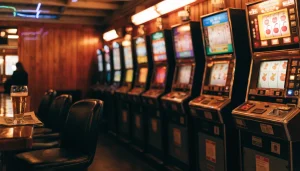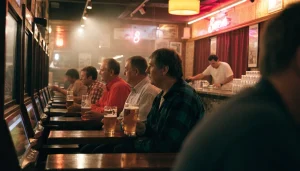
A location result can point to a venue, but it does not confirm that gaming machines operate there or are currently accessible.
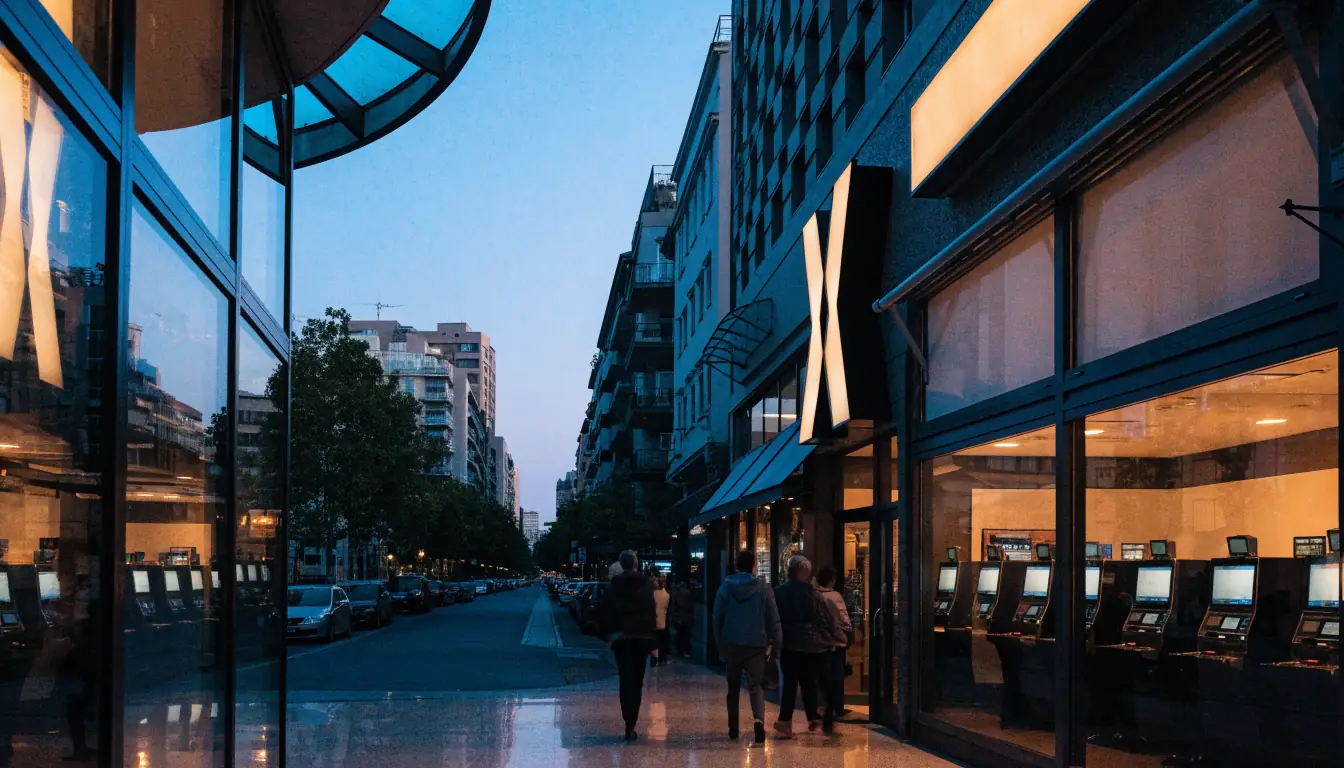
A request for pokies near Sydney can refer to a physical venue within convenient reach, rather than an online game available through a device. These are different kinds of location intent. A map result may help identify a business address, while a phrase about online play describes a service that is not tied to a nearby room or building. The wording alone does not establish which meaning is intended.
A location label is not proof that pokies are available at a particular address. Search results can combine venue names, map listings, older pages and promotional material. Even when a business appears in a local result, that appearance does not confirm that it currently operates gaming machines, that those machines are open to the public, or that the listing is up to date. Those claims require current information from a reliable venue or regulator source.
The same distinction applies to broad descriptions such as “near me” or “near Sydney”. A result may be geographically close to the centre of a search area without being close to the person making the search. Sydney can also refer to a large metropolitan area rather than a single point. Without a defined starting location and a verified venue address, “near” has no precise, independently meaningful distance.
Choosing pokies to play in Sydney in 2026 means weighing more than game names alone. This reference gives you a quick look at the available licensing and payment details for each listed operator.
Roby Casino
Roby Casino is listed with a Curacao eGaming license held by Roby Games Ltd.
7Bit Casino
7Bit Casino is operated by Dama N.V. and holds a Curacao license.
WinSpirit Casino
WinSpirit Casino lists a Curacao eGaming license, OGL/2024/923/0383, issued through Antillephone N.V. Its minimum deposit is A$30.
SkyCrown
SkyCrown is licensed by the Tobique Gaming Commission. Its listed payout speeds are around 10–15 minutes for crypto and 1–5 days for fiat.
JustCasino
JustCasino is listed with a Curacao Gaming Control Board license.
Golden Pokies
Golden Pokies is listed with a Curacao license.
LuckyVibe
LuckyVibe holds a Curacao Gaming Control Board license, OGL/2023/176/0095, associated with Hollycorn N.V.
Thor Casino
Thor Casino is licensed in Curacao through Antillephone N.V. (Versus Odds B.V.). Its minimum deposit is EUR 20.
DragonSlots Casino
DragonSlots Casino is licensed by the Curacao Gaming Authority, with Jumpman Gaming Ltd named as the operator.
Vegaz Casino
Vegaz Casino lists a Curacao license, OGL/2024/1335/0780. Its minimum deposit is EUR 20.
Queries naming a transport hub or central district are more specific about the desired area, but specificity in wording does not supply evidence. It cannot establish that a venue is inside an airport, close to a station, within the central business district, or operating at the stated location. A reference to a place outside New South Wales may also reflect confusion about geography or a different intended destination. It should not be used to infer that a Sydney venue exists there.
Results for online pokies near Sydney require a separate interpretation. The phrase can describe someone looking for digital play while physically in the area; it does not point to a nearby venue. Online availability and the status of real-money services in Australia are distinct from the question of where land-based pokies are located. Treating an online result as a local address, or a venue listing as evidence of an online service, conflates two different things.
The words “open now” add a time-sensitive element, but do not make a listing more reliable. A result can display hours without demonstrating that the information has been recently checked, and a listed business schedule does not by itself confirm that pokies are available at that time. Current opening information therefore needs confirmation from the venue; it cannot be inferred from the search wording or from a map pin. This is especially important when results are aggregated from sources that may not be maintained by the venue.
For NSW venues, a report published by regionriverina.com.au describes a requirement for venues with more than 20 gaming machines to have a dedicated responsible gambling officer on duty while the machines are operating, from 1 July. This is a reported oversight condition, not a directory of Sydney venues and not evidence that a particular premises meets the threshold or has machines available. It does not resolve whether a location result is current.
A dependable location check therefore involves matching a venue’s own current address and operating information against the place being considered, rather than relying on a search label alone. Where a listing does not identify its source or update status, claims about machine availability remain uncertain. Broad area wording can help frame the intended destination, but it cannot establish that a venue exists at a specific address or that its facilities are currently accessible.
A request for online pokies in Sydney can describe a different activity from playing pokies at a physical venue. The distinction is not simply whether the game resembles a machine found on a casino floor. For real-money online play, the relevant issue is whether an operator is providing an interactive gambling service to people in Australia.
The Interactive Gambling Act 2001 prohibits companies from providing real-money online casino games, including pokies, to customers in Australia. The law does not create a domestic licensing route for online casinos: no Australian online-casino licences have been issued. As a result, there is no Australian-licensed online casino, whether a service presents itself as being based in Sydney or as serving the wider Australian market.
Legal Prohibition
The Interactive Gambling Act 2001 prohibits the provision of real-money online casino games to customers in Australia, and no domestic online-casino licences have been issued.
That position differs from land-based gaming. A physical venue and an internet service are not legally interchangeable merely because both offer similar games. The online prohibition concerns the provision of real-money interactive gambling services to people in Australia. A venue search or a reference to a Sydney casino does not, by itself, establish that an online version is authorised for Australian customers.
The same distinction matters for searches seeking a casino’s online pokies, real-money play, or a bonus tied to an online account. Promotional wording does not alter the legal status of the underlying service. Nor does an apparent connection to a physical casino establish that the online offering is covered by Australian authorisation. The absence of a domestic online-casino licence is central to assessing such claims.
This is also why claims about the “best-paying” online pokies in Sydney require care. A ranking or payout claim cannot make a prohibited service lawful, and a Sydney label does not show that an online casino is licensed in Australia. The legal position is separate from questions about an individual game’s mechanics or a venue’s machines; those questions should not be treated as evidence of online authorisation.
For players, an important consequence concerns disputes. If an offshore casino withholds winnings, Australian players have no legal recourse in Australia to recover them through a domestic online-casino licensing framework. This is not a finding about how any particular operator would handle a payment. It describes the protection that is absent when the service is not licensed under an Australian online-casino regime.
A search for a no-deposit offer or other online promotion does not change that position. Such offers remain attached to an online gambling service, and promotional language should not be confused with regulatory approval. Similarly, a cashless or high-stakes option describes a possible feature of play, not the legal status of the provider. No online feature can substitute for a licence that does not exist in Australia.
The safest reading of the legal distinction is therefore narrow: real-money online pokies offered to people in Australia fall within a prohibited category of interactive gambling services, while land-based play is a separate activity governed in its own setting. The Act targets companies providing the prohibited service; it does not establish an Australian-licensed online casino for players to use. These points do not identify or endorse an online provider. They explain why searches for online pokies around Sydney should not be read as evidence that a lawful, locally licensed online casino is available.
Opening time is a separate question from whether a venue has pokies. A venue’s general trading hours do not, by themselves, establish when its gaming area is open or when machines can be used. The distinction matters for anyone considering an early visit: a schedule for a hotel, club or other venue cannot automatically be read as a schedule for its pokies.
There is no sound basis for treating early access as a Sydney-wide fact. Claims that pokies are available from early morning, or remain available late into the night, need to be tied to a particular venue and a current statement of its gaming-area hours. Without that detail, a broad description of pokies as “open” leaves an important ambiguity: it may refer to the premises rather than the machines.
Attention: A venue's general trading hours do not automatically confirm that its gaming area or pokies are open during those same times.
The same caution applies to searches about a six-o’clock or seven-o’clock start. Those times are specific enough to require direct confirmation, but they do not establish that any Sydney venue begins operating pokies then. Nor does a late closing time for a venue establish that its gaming facilities remain open until the premises close. A schedule may distinguish between the venue’s public areas and its gaming facilities; where it does not, the timing should not be inferred.
Hours can also be time-sensitive. A published schedule may not reflect a temporary closure, a change in operating arrangements or a different schedule for a particular day. Public-facing information is useful only if it clearly identifies the relevant venue, the gaming area and the period to which the hours apply. A result that gives only a venue name or a general opening time cannot settle those points.
For an early or late visit, the reliable form of confirmation is a current statement from the venue that specifically covers pokies operation. If the information is ambiguous, it does not support a definite conclusion about machine availability at that time. This is not a claim that Sydney venues follow one common schedule; it is a limit on what can be concluded from a general opening time.
A reported NSW requirement offers a separate example of why operating hours matter. RegionRiverina.com.au reported that, from 1 July, venues with more than 20 gaming machines must have a dedicated Responsible gambling officer (RGO) on duty while the machines are operating. That requirement concerns staffing during machine operation; it does not set a public opening time or establish when any individual venue begins or ends gaming. It should not be used as a proxy for a venue schedule.
Consequently, references to pokies opening early or staying open late should be treated as venue-specific claims, not as a general description of Sydney. A precise time is meaningful only when attached to current information about the relevant gaming area. A venue’s ordinary opening hours, standing alone, cannot confirm that its pokies are operating throughout that period.
Claims that one Sydney casino has the “best-paying” pokies cannot be established from a game’s name alone. Even where the same pokie is available at different venues, its return percentage may not be identical. A specialist review reports that some game providers let casinos choose between multiple return-to-player (RTP) settings for a game. That possibility matters when comparing machines, but it does not show which setting any particular Sydney venue uses.
An RTP figure describes a setting associated with a game; it is not a prediction of what a particular player will receive. Nor does it establish that one venue will produce a better result during a short session. Without evidence identifying the settings in use at each venue, claims about the best-paying pokies in Sydney would go beyond what can be supported. A comparison based solely on game titles, promotional descriptions or a venue’s reputation would not resolve that gap.
The outcome of each spin is determined independently by a Random Number Generator. This means a result does not follow from the previous spin: a loss does not make a win due, and a recent win does not establish what will happen next. Past outcomes therefore cannot substantiate a claim that a machine is about to pay, or that a particular venue’s machines are more likely to pay during a visit.
Each spin is determined independently by a Random Number Generator, meaning past outcomes do not influence future results or indicate that a win is due.
These distinctions help separate information about machine mechanics from rankings that imply a dependable advantage. A game’s stated RTP setting, if independently documented for the specific machine, would be relevant to a technical comparison. It would still not guarantee an individual outcome. In the absence of venue-specific documentation, a label such as “best paying” is not a verified attribute of Sydney casino pokies.
The same caution applies to lists of the best pokies in Sydney CBD or elsewhere in the city. A list may name games, but naming them does not establish the settings in which they operate at a particular venue. Conversely, a general statement about a provider’s possible settings cannot be treated as proof that every casino can select from them, or that any Sydney casino has chosen a particular return percentage. The available claim is limited to some providers offering this option.
Accordingly, the defensible distinction is between a machine-level fact and a venue-level conclusion. Independent random spins are a feature of the process; selectable RTP settings are reported for some provider offerings; neither fact identifies a Sydney venue with superior payouts. Establishing that comparison would require reliable, venue-specific information about the settings in use. Without it, “best-paying” remains an unsubstantiated ranking rather than a conclusion supported by machine mechanics alone.
References to pokies at Sydney Airport or in North Sydney describe a specific place, not a confirmed offer of gaming machines. A location name on its own cannot establish that a venue there has pokies, what machines it operates, or whether access is available to the public. Those distinctions matter because an airport precinct, a suburb and an individual venue are not interchangeable units of evidence.
The same caution applies to searches concerning Sydney city. A broad city label can cover many different premises and does not identify a particular operator or gaming area. Without venue-level confirmation, statements about machine availability in the airport, North Sydney or the city centre would go beyond what can be established. The location may be familiar, but familiarity is not evidence of a machine’s presence.
This also limits what can be said about a maximum cash payout. The phrase does not identify a particular pokie, its rules, or the venue where it might be installed. A payout amount cannot be inferred from the suburb or airport name, and a general claim about a “maximum” would be misleading without a defined machine and verified terms. The location alone does not establish a payout ceiling.
One relevant operational rule concerns oversight rather than local availability. A report published by regionriverina.com.au described a requirement taking effect from 1 July: venues operating more than 20 gaming machines are to have a dedicated Responsible gambling officer (RGO) present while those machines are running. This describes a threshold-based duty for qualifying venues; it does not establish that any particular airport or North Sydney premises meets the threshold or operates pokies.
The distinction is therefore between a place-based description and evidence about an actual venue. A claim tied to Sydney Airport would need to identify the relevant premises and substantiate machine availability there. The same is true of North Sydney and Sydney city. In the absence of that level of detail, no reliable comparison of locations, machine access or cash payouts can be made from the place names alone.
This is not a claim that such premises do or do not have pokies. It is a limit on what can be stated without identifying a venue and confirming its offering. For location-specific statements, the evidence needs to attach to the premises concerned, rather than rely on a broad geographic label.
Interest in pokies at Crown Sydney is a request for information about a particular venue. It does not, by itself, establish which machines are available, whether a dedicated pokies room operates, or what features patrons may find there. Those details require current, venue-specific confirmation; without it, claims about Crown’s machine selection or facilities would be speculation.
A useful account would distinguish among several kinds of information. Machine availability concerns whether pokies are offered at the venue at all. A description of a room would need to establish its location and access arrangements. Claims about the range of machines or particular features would need reliable, up-to-date support of their own. One category cannot be inferred from another: a venue’s name or casino status is not evidence of a specific game, machine setting, or room layout.
The same caution applies to descriptions such as “best pokies room”. That label requires a stated basis for comparison, such as a documented feature that can be checked across venues. Without verifiable criteria and comparable information, it is an opinion presented as a finding. No ranking or recommendation follows simply from a Crown-related search.
Regulatory information also needs to be kept separate from venue-specific claims. A report published by regionriverina.com.au says that, from 1 July, venues with more than 20 gaming machines must have a dedicated responsible gambling officer on duty while the machines are operating. This describes a reported requirement for qualifying venues generally; it does not establish how many machines Crown Sydney has or whether the requirement applies there. The threshold cannot be used to infer a venue’s machine count.
Accordingly, a factual description of Crown Sydney’s pokies would need direct confirmation from a current venue source or another dependable record. Until such details are established, the sound distinction is between general rules that may apply to qualifying venues and claims about Crown’s own machines, rooms, or facilities. The latter should not be stated as fact without venue-specific evidence.
Responsible-gambling obligations offer a more concrete basis for assessing pokies venues than claims that one is the “best” in Sydney. A venue’s size can determine whether a dedicated Responsible gambling officer (RGO) is required, while an incident register provides a formal record of situations involving potential gambling harm. These measures concern oversight, not the quality or likely returns of the games.
A report by regionriverina.com.au says that, from 1 July, venues operating more than 20 gaming machines must have a dedicated RGO on duty whenever those machines are running. The officer requirement is therefore tied to both the number of machines and their operation; it is not described as applying to every venue regardless of size. The report does not establish which Sydney venues meet that threshold or whether a particular venue has an officer on duty at a given time.
The same report describes a requirement for venues to maintain a gambling incident register. It is intended to document occurrences, including circumstances in which a patron’s behaviour suggests that gambling may be causing harm or that the person may be at risk. An incident register is an oversight record, rather than a ranking of venues or an assurance that harm cannot occur. The report does not specify how individual entries are assessed or what action follows each recorded incident, so those details should not be inferred.
For people comparing Sydney pokies venues, these requirements can help frame questions about venue oversight, but they do not establish which venue is best. The threshold alone cannot show whether a particular venue falls within the requirement, and a general description of the register cannot confirm how a specific venue applies it. Venue-specific status needs current confirmation from the relevant venue or regulator.
Nor do these measures say anything about a venue’s machine selection, game settings, payouts or opening schedule. They address staff presence and the recording of incidents associated with gambling harm. Keeping those categories separate avoids treating a compliance measure as evidence of game quality.
The practical distinction is important: a rule about responsible-gambling arrangements may apply to qualifying venues, but it does not supply a verified comparison of Sydney locations.
A venue described as open around the clock would not necessarily have pokies available throughout every hour it admits the public. The terms refer to separate things: a venue’s public operating schedule and the periods when its gaming machines are in operation. A continuous opening schedule, on its own, does not establish continuous machine availability.
The distinction matters when assessing claims about Sydney pokies hours. A listing may describe a venue’s general opening times without specifying whether the gaming area follows the same schedule. Conversely, information about machine operation does not establish when patrons can enter the venue. These details need to be read separately rather than treated as interchangeable.
An “open now” label is also time-sensitive. It can indicate that a business is listed as open at the point the information is displayed, but it does not, by itself, confirm that pokies are operating or that a particular gaming area is accessible. Published hours can also become outdated, so a current venue notice or direct confirmation is more useful for establishing a schedule than a search result alone.
There is a related distinction between regulatory requirements and opening times. A report by regionriverina.com.au describes a requirement taking effect from 1 July: venues operating more than 20 gaming machines are to have a dedicated responsible gambling officer (RGO) on duty whenever those machines are running. That condition concerns staffing during machine operation; it does not set a venue’s public hours or mean that a venue operates continuously.
Accordingly, “24-hour pokies” can refer to an expectation about either venue access or machine operation, but neither follows automatically from the other. A reliable account of availability would need to specify which one is being described and apply to the relevant venue and date. The phrase alone cannot establish a Sydney venue’s current schedule, nor whether its pokies are operating at a particular time.
Interest in pokies at Sydney CBD clubs often combines two different concerns: what machines a venue offers and how it responds when gambling causes harm. These questions should not be treated as interchangeable. A club’s location or gaming-machine presence does not, by itself, establish how its oversight operates.
A report published by regionriverina.com.au describes a requirement for venues to keep a gambling incident register. The register is intended to record events that may indicate a patron is at risk of gambling harm or is already affected by it. This makes the record-keeping obligation relevant to club oversight, but it does not establish the practices or machine selection of any particular CBD venue.
For people considering self-exclusion from pokies, the distinction between a general safeguard and a specific venue process also matters. Self-exclusion is recognised as a responsible-gambling tool, alongside deposit, loss and session-time limits. The existence of such tools does not establish how an individual club handles an exclusion request, what access restrictions it applies, or how its staff respond in a particular situation. Those details require venue-specific confirmation.
Likewise, a description such as “best pokies in the Sydney CBD” cannot be resolved by the word “best” alone. It might refer to machine variety, accessibility or support measures, but those are separate criteria. No ranking follows from the fact that a venue is a club or that it keeps incident records. Claims about individual machines or clubs therefore need evidence tied to the specific claim, rather than an assumption based on the CBD location.
The incident-register report offers a limited, concrete point about oversight: gambling-related events may be documented, including signs that a patron is experiencing harm. It does not serve as a guide to club choice, machine performance or the availability of self-exclusion at a named venue. Keeping these categories separate allows CBD club information to be assessed without turning a general oversight measure into a claim about a particular venue.
A reference to Parkes alongside Sydney does not, by itself, identify a particular venue or even establish which location the wording is intended to describe. Place names can be used in different ways, and a short phrase may leave the relationship between them unclear. Without a confirmed venue identity, it is not possible to treat the wording as evidence that pokies are available at a Parkes location in Sydney.
The same distinction applies to requests for the best pokies in Sydney. A search phrase can express an interest in venues or machines, but it cannot substantiate which machines a venue operates, how they are configured, or whether any particular selection is preferable. Those details require venue-specific information that can be independently checked. None should be inferred from the place name or from the phrasing of the request.
Nor does a location reference establish when a venue is open or when its machines can be used. Opening schedules and machine availability are separate facts; neither follows from the word “Parkes”. Naming a venue, describing its machine range, or stating its hours without confirmation would turn an ambiguous location reference into an unsupported local claim.
There is a relevant oversight detail, but it does not resolve the location question. A report published by regionriverina.com.au describes a requirement for venues operating more than 20 gaming machines to have a dedicated responsible gambling officer on duty while those machines are operating, from 1 July. This is a reported venue obligation, not evidence that a particular Parkes venue exists in Sydney or has gaming machines. It should not be used to infer the size or operating status of any unnamed venue.
Accordingly, the Parkes wording can be understood as a request for local information, but it does not establish the place intended, a venue’s pokies, or its operating arrangements. Specific claims require a clearly identified venue and current, venue-level confirmation. Until then, the responsible account is limited: the location reference alone cannot support a recommendation or a description of what is available.
Yes, Australians can play on offshore sites that accept them, but no online casino holds an Australian licence. The law prohibits companies from providing real-money online pokies to Australians without a domestic licence, and it targets operators rather than players.
It is the amount you must bet before you can withdraw bonus-related winnings. For example, a $500 bonus with a 40x requirement means you must place $20,000 in bets.
Each spin is an independent random event determined by a Random Number Generator. However, the same game may have different return-to-player settings at different casinos.