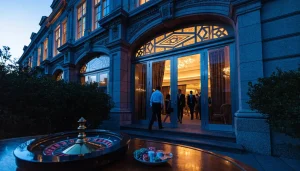
The page distinguishes verified accommodation links from nearby hotels and explains why room, deal and venue claims need specific evidence.

A hotel described as part of a casino is a more specific proposition than a hotel located in the same city. The description implies a confirmed relationship between a gaming venue and accommodation: perhaps rooms within one property, a shared operator, or a package linking the two. Those arrangements should not be treated as interchangeable. A hotel’s presence in Canberra, by itself, would not establish that it is a casino hotel.
The same distinction applies to room and deal descriptions. A claim that casino hotel rooms are available depends on an identifiable property and current accommodation information. A claim about a deal additionally depends on its stated price, dates, conditions and inclusions. Without those particulars, there is no sound basis for describing a rate as a casino package or presenting an offer as bookable. The wording of a listing alone cannot establish what is included.
This matters because hospitality terms can suggest a connection that has not been demonstrated. A hotel may be marketed in a way that associates it with entertainment or nearby attractions, while remaining a separate business. Conversely, a genuine hotel-and-casino arrangement would need to be identified through clear property and booking details. The distinction is practical: it affects what guests can expect to find on site, who provides the accommodation, and which terms govern a reservation.
Choosing an online casino for a Canberra-focused search means checking the details that are actually available, such as licensing and stated payment terms. Use this list as a starting point and review each operator’s current terms before signing up.
Roby Casino
Roby Casino is listed with a Curacao eGaming license held by Roby Games Ltd.
7Bit Casino
7Bit Casino is listed as operating under a Curacao license, with Dama N.V. as its operator.
WinSpirit Casino
WinSpirit Casino lists a Curacao eGaming license, OGL/2024/923/0383, issued through Antillephone N.V. Its stated minimum deposit is A$30.
SkyCrown
SkyCrown lists a license from the Tobique Gaming Commission and a minimum deposit of A$30. Its stated payout timing is around 10–15 minutes for crypto and 1–5 days for fiat.
JustCasino
JustCasino is listed with a Curacao Gaming Control Board license.
Golden Pokies
Golden Pokies is listed with a Curacao license.
LuckyVibe
LuckyVibe lists a Curacao Gaming Control Board license, OGL/2023/176/0095, held by Hollycorn N.V.
Thor Casino
Thor Casino is listed with a Curacao license through Antillephone N.V., with Versus Odds B.V. as operator. Its stated minimum deposit is EUR 20.
DragonSlots Casino
DragonSlots Casino is listed with a Curacao Gaming Authority license, with Jumpman Gaming Ltd as operator.
Vegaz Casino
Vegaz Casino lists a Curacao license, OGL/2024/1335/0780. Its stated minimum deposit is EUR 20.
For a Canberra property to be accurately characterised as a casino hotel, basic details would need to align: the hotel’s name and address, the identity of the accommodation provider, and a clear description of its relationship to a casino. A room listing should also specify the room type, occupancy conditions, dates and cancellation terms. If a package is advertised, its inclusions should be stated rather than inferred from the casino label. These are ordinary checks on the meaning of a hospitality offer, not evidence that any particular Canberra property meets them.
The distinction also limits how “casino hotel deals” can be described. A discounted room is not necessarily a casino promotion, and a casino-related promotion is not necessarily an accommodation offer. Any purported package would need terms that identify the participating businesses and explain what the price covers. Without that clarity, comparisons between offers could be misleading: two listings using similar labels might provide different services, or one might have no confirmed connection to a casino at all.
The phrase “casino hotel in Canberra” therefore should not be read as confirmation of a particular venue or property arrangement. It expresses an expectation about the kind of accommodation being sought, but the label alone cannot verify rooms, rates or a joint offer. Nor can it establish that accommodation is operated by a casino, situated within casino premises, or sold under shared booking terms. Each of those is a separate factual claim.
There is a further difference between accommodation information and venue information. A room booking page can establish details about a hotel’s accommodation only to the extent that it identifies the provider and the applicable terms. It does not, on its own, establish the status or facilities of a casino. Likewise, a reference to a casino cannot substitute for the hotel’s room inventory or booking conditions. Keeping the two claims separate avoids presenting an assumed connection as a confirmed feature.
Accordingly, descriptions of Canberra casino hotel rooms or deals require more than a broad label. A defensible account would identify the property and explain the relationship between its accommodation and the casino, then state the booking terms attached to any room or package. Without those specifics, the association remains unsubstantiated, and no particular room, rate or deal can responsibly be presented as established.
A poker room and a poker-machine area describe different forms of gambling. Poker-room searches concern table poker, where players compete against one another; tournament searches imply organised play with defined entry and competition arrangements. Neither term is interchangeable with Electronic Gaming Machines (EGMs), known locally as pokies. Evidence about poker machines in New South Wales therefore cannot establish that a Canberra venue provides poker tables, tournaments or dedicated rooms.
The distinction matters because a venue’s association with gambling does not, by itself, identify which activities it offers. A reference to pokies would not demonstrate that table poker is available, while a poker tournament listing would not establish the presence of a poker-machine floor. These are separate claims about facilities and programming, requiring their own support.
New South Wales rules provide a limited comparison, not a description of Canberra provision. In NSW, gambling on poker machines is restricted to people aged 18 or older. The state also requires pre-commitment measures under which a player sets a loss limit before beginning to play. Those rules concern poker-machine gambling in that jurisdiction; they do not establish the arrangements for poker rooms or tournaments in the ACT.
The scale of machine gaming in NSW also should not be mistaken for evidence about table poker. Club Liverpool has more operating poker machines than any other club in the state. That fact describes the distribution of machines among NSW clubs. It says nothing about whether the club runs poker tournaments, and it provides no basis for inferring that a Canberra casino has a poker room.
The wording of a request for “casino rooms” can also refer to different things. It might mean accommodation, private rooms, or an area devoted to poker. Those meanings cannot be resolved simply by connecting the word “rooms” with a casino. A claim about a dedicated poker space would need to identify that space and distinguish it from hotel accommodation or other venue facilities.
Tournament information requires comparable care. A named event, its schedule, entry conditions and format are venue-specific details; none follows from the existence of poker machines or from the age and pre-commitment rules applying in NSW. Without such particulars, a tournament cannot be described as operating in Canberra, whether regularly or on a one-off basis.
The same caution applies to a sports bar. A request combining poker and a bar does not demonstrate that the two facilities are located together, or that either is part of a casino property. Nor does the presence of a sports bar establish that poker is offered there. Venue amenities and gambling activities are distinct claims.
Questions about whether a casino is open on a particular day or at a particular time are also separate from the legal rules for NSW poker machines. Those rules do not establish local opening hours, and they cannot support a claim that a Canberra poker room or tournament is operating at present.
For Canberra, the relevant distinctions are between machine gaming, table poker, scheduled tournaments and other rooms or amenities. Treating them as equivalent would turn a narrow fact about NSW poker machines into an unsupported description of local facilities. The NSW age threshold and pre-commitment requirement remain specific to the state’s machine-gambling framework; neither supplies a factual account of poker in Canberra.
Online pokies are governed by a Random Number Generator (RNG), which determines the result of each spin. The RNG does not retain a record of previous outcomes and use that record to shape the next one. Each spin is independent: a sequence of wins or losses does not make a particular result more or less likely on the following spin.
That distinction matters when interpreting short runs of play. A run of losing spins is not evidence that a win is due, just as a recent win does not establish that another will follow. Past outcomes do not change the next spin’s result. Increasing a stake to recover losses therefore has no mechanical basis in the RNG; it can instead expose more money to play. A session budget based on available bankroll, and not chasing losses, are prudent limits on that exposure.
RTP, or return to player, describes a different feature. It is the theoretical share of wagered money that a pokie pays back when considered across a very large number of spins. It is not a prediction of what an individual player will receive in a session, nor does it promise that a particular stake will be returned. The distinction is between a long-run theoretical measure and outcomes over a much shorter period. A game’s RTP cannot be read as a schedule of wins or as a guarantee for any single player.
Progressive jackpot pokies use another mechanism: a small portion of each bet is added to a jackpot that grows over time. The pooled contributions explain how the prize can increase, but they do not make a win predictable from the size or recent movement of the jackpot. The amount shown at a given moment is not evidence that a particular spin is more likely to win it. Jackpot accumulation and RNG-determined outcomes are related to the game’s structure in different ways; one does not reveal the result of the next spin.
These mechanics also clarify why game categories should not be conflated. Baccarat and craps are table games, while pokies resolve outcomes through individual spins. Knowing how an RNG, RTP or progressive pool works does not establish whether a Canberra venue offers baccarat, craps or any particular pokie. Those are venue-specific questions, separate from the mechanics described here.
The same distinction applies to searches about a casino bar, car park, concerts, contact details or a map. Such practical details cannot be inferred from how a game operates. The game mechanics provide no basis for identifying a venue’s facilities, location or services, so those details require separate confirmation rather than assumption.
For pokies, the central points are therefore limited but useful: the RNG determines each spin, previous results do not affect later ones, RTP is a long-run theoretical measure, and progressive jackpots grow through pooled contributions from bets. None of these features makes future outcomes predictable.
The phrase “casino in Canberra” can refer to a physical venue, an online service, or amenities associated with a venue. Those are different questions. Rules governing online casino services do not establish that a Canberra casino operates online, nor do they describe local services such as parking, valet parking or dining.
The Interactive Gambling Act 2001 prohibits operators based in Australia from providing real-money online casino games to people in Australia. The restriction covers pokies and table games such as blackjack and roulette. An Australian-run online casino therefore cannot lawfully offer those services to players located in the country. Sports betting is treated differently under Australian law, but that distinction does not make online casino games permissible.
Legal Restriction
The Interactive Gambling Act 2001 prohibits Australian-based operators from providing real-money online casino games to people located in Australia.
Offshore platforms occupy a different position. Australian players are not technically committing an offence merely by using an offshore casino, but those platforms are not regulated under Australian law. That leaves a material difference between a player’s legal position and the operator’s obligations: the fact that a player is not prohibited from using a service does not mean the service is licensed or protected by the Australian regulatory system. Offshore access should not be mistaken for approval to operate in Australia.
This distinction matters when interpreting references to an online casino in Canberra. A website may be accessible from an Australian location without being an Australian-authorised casino. Conversely, a company’s overseas licence does not amount to a local licence to provide online casino games to Australians. The legal focus is on the service offered to people in Australia, not on whether the website uses Canberra in its branding or whether a player is physically in the territory.
Bingo and dining require separate consideration. The online-gambling rules described above concern the provision of casino-style games; they do not establish that a local venue offers bingo or dining. Nor does an online casino’s presence imply access to an in-person casino, restaurant or other facility in Canberra. These terms refer to distinct activities and services, and one cannot be used as evidence for another.
Parking is likewise a venue-specific matter, not a feature that follows from the word “casino.” Whether a property has parking, valet service or complimentary spaces depends on the particular site and its arrangements. Online gambling legislation supplies no information about those practical details. A general reference to casino parking therefore cannot be treated as confirmation of an on-site facility or a particular parking arrangement.
For searches combining Canberra, online casinos and parking, the central distinction is between a regulated local venue and an online service. The law defines the position of online casino operators and the limited status of offshore platforms; it does not establish local casino amenities. Claims about physical access, parking or dining need to be tied to an identifiable venue rather than inferred from online gambling terminology.
Accommodation described as being “near” a casino depends on a confirmed venue location. Without a specific address, proximity cannot be assessed meaningfully: a hotel’s distance, route and travel time all depend on the destination being used. The phrase alone does not identify a property or establish that accommodation is attached to a casino.
A sound comparison therefore begins by separating three different claims. A casino hotel would mean rooms form part of the venue or are operated with it. A package would mean accommodation is sold together with some other service or offer. A nearby hotel would be an independent property whose location is described in relation to a casino. These are not interchangeable descriptions, and none follows simply from a listing that combines the words “casino” and “accommodation”.
For an independent property, the useful details are its street address and the address of the intended destination. Those allow a map to show the route rather than relying on a broad label such as “nearby”. Straight-line distance may not reflect the actual journey, particularly where roads, crossings or access points affect the route. A stated travel time also depends on the mode of transport and conditions, so it should not be treated as a fixed property of the accommodation.
The same distinction matters when comparing prices. A rate displayed for a room is not necessarily a casino accommodation deal. It may be a standard room price, a promotion with separate conditions, or a package whose inclusions need to be specified. Before treating an offer as a combined booking, its terms should make clear which accommodation is included, what dates apply, and whether any additional service is part of the price. The wording of a promotion is not a substitute for those details.
Accommodation listings can also use destination labels broadly. A property may appear in results associated with a place or attraction without being affiliated with it. That does not establish a partnership, venue access, transport arrangement or special booking benefit. Affiliation requires an explicit statement from the parties involved; geographic association alone is not enough.
For a Canberra stay planned around casino access, the practical sequence is therefore to resolve the destination first, then compare accommodation by address and booking conditions. If the destination cannot be identified precisely, claims about walking distance, transfer convenience or a special casino rate cannot support a reliable comparison. The same caution applies to promotional wording that suggests a connection without explaining its terms.
This approach avoids treating an assumed casino location as a fixed point on a map. It also keeps ordinary accommodation choices separate from claims that rooms are supplied by, or commercially linked to, a gambling venue. Those distinctions are more useful than an unqualified “near” label, because they show what a booking actually provides and what remains only an association in its description.
Breakfast, buffet and resort wording can imply a single property offering accommodation, dining and gaming under one brand. Those are separate claims: a breakfast service or buffet would need to be tied to a particular venue, while “casino resort” suggests a broader property and package. The terms alone do not establish that these facilities or arrangements exist in Canberra. They should not be treated as confirmation of a menu, service schedule, booking option or casino-linked stay.
Rewards also covers more than one kind of offer. A venue loyalty programme may relate to membership or on-site benefits; an online casino bonus may instead impose conditions on withdrawing winnings. The distinction matters because a headline offer does not describe how it works. For free spins, the terms may specify which games count, how winnings are calculated, and what must happen before funds can be withdrawn. Without those conditions, the value of an advertised reward cannot be assessed from its label.
A report by psu.com describes free-spin winnings as subject to wagering requirements in a range from 20 to 50 times the winnings before withdrawal. That is a report about promotional terms, not a rule that applies to every offer. A separate specialist review describes one arrangement requiring free-spin winnings to be wagered 30 times before withdrawal. These figures illustrate why individual terms must be read as specific conditions rather than assumed to apply across providers.
The contribution of pokies to wagering requirements is another relevant detail: they are typically counted in full towards the requirement. That does not mean every bet produces withdrawable funds, or that a bonus is equivalent to cash. A promotion can still be subject to restrictions on eligible games, withdrawal limits or other clauses. The actual terms attached to an offer determine its effect.
Promotional language can also blur the difference between a reward and a reduction in cost. A bonus may increase the amount available to play with while leaving the player responsible for meeting conditions before withdrawal. Where a requirement is expressed as a multiple, the relevant base—such as the bonus, winnings or combined amount—should be clear in the terms. If it is not clear, the headline alone cannot settle the calculation.
For breakfast and buffet arrangements, the same principle applies: a broad resort or casino label is not a substitute for a named service and its current details. Dining availability, included meals and membership benefits are venue-specific matters, not consequences of the word “casino.” Keeping those categories separate avoids treating an implied package or promotion as a confirmed feature of a Canberra venue.
A venue’s opening status, planned reopening and regular hours are distinct claims. A dated notice from an operator or relevant authority would be needed to establish whether a Canberra casino is operating and when it admits visitors. A proposed reopening is not the same as a confirmed opening, and an old announcement cannot establish current hours. No specific schedule or reopening date can be stated here.
Development claims require similar care. A proposal, planning application, approval and completed project describe different stages; none alone establishes that a casino has opened or that a particular facility is available. The phrase “casino development” may refer to a project under discussion rather than an operating venue. Without a confirmed project and its status, claims about construction, expansion or a launch date remain unsupported.
Employment information also depends on a named employer and a current vacancy notice. General references to casino jobs do not establish that positions exist in Canberra, what roles are available, or whether recruitment is under way. A job listing should be tied to the organisation offering the role and checked for its date and location; otherwise it may concern another venue or an outdated opportunity.
Entertainment and event listings need an identifiable organiser, venue and event date. A performance or function associated with a casino elsewhere cannot establish a Canberra programme. Nor does an event announcement, by itself, prove that the venue is open for ordinary visits. Claims about recurring entertainment require evidence of an ongoing schedule rather than a single listing.
A menu is also a separate matter from opening status or event programming. A menu page may be old, belong to another business, or describe a proposed service; it cannot establish that a casino is operating.
Reviews require the same distinction between opinion and verifiable venue information. A review may describe an individual visit, but it does not establish current hours, future development, present job vacancies or upcoming events. For those questions, dated statements from the responsible operator or authority are more probative than undated summaries or promotional references.
Accordingly, claims about a Canberra casino being open, reopening, hiring or hosting events should not be treated as established without current, attributable documentation. No local operating hours, development timetable, employment programme or event calendar can be reported here.
A Canberra casino’s location, spa facilities, bars, careers and dress expectations are venue-specific matters. Search terms alone do not establish that a casino operates in Canberra or that any of these amenities or services are available there. A street address, named spa, bar listing, recruitment contact or dress policy should therefore not be treated as confirmed without information from the venue or an authoritative public record.
This distinction matters because a spa or bar may be associated with a hotel or entertainment precinct without belonging to a casino. Similarly, a careers page could refer to a wider hospitality business rather than casino employment. The names and boundaries of businesses need to be clear before those details can be attributed to a particular venue.
Dress-code descriptions also require care. Terms such as “smart casual” or “formal” are not reliable substitutes for a venue’s current policy. Entry conditions can differ by area or occasion, and an informal description cannot establish what clothing is accepted. No specific dress standard for a Canberra casino can be stated as fact.
A further distinction applies to searches for casino games. Electronic Gaming Machines (EGMs), table games and online games are not interchangeable categories. In Australia, the Interactive Gambling Act 2001 prohibits operators from providing real-money online casino games, including slots, poker and table games, to people physically located in the country. That legal position concerns online services; it does not establish what games, if any, are offered at a local venue.
The law also does not supply a location, bar menu, spa timetable or employment listing. Those details require separate, current evidence tied to an identifiable business. Without that connection, a result bearing a similar name or describing a nearby hospitality property cannot establish that it is part of a Canberra casino.
For employment, the relevant distinction is between a general hospitality vacancy and a role connected to casino operations. A job title alone may not identify the employer or workplace. For facilities, an address alone would likewise be insufficient to show that a spa or bar is operated by the same business.
The terms “casino”, “spa”, “bar” and “careers” can therefore point to separate services rather than one verified venue. Claims about a Canberra casino’s address, amenities, recruitment or dress requirements remain unsubstantiated unless they are linked to reliable venue-specific information.
A restaurant associated with a casino is a venue-specific claim. It requires more than a casino reference in a business name, a directory category or a search result: the restaurant must be identified, and its connection to the venue must be clear. Without that, claims about dining at a Canberra casino cannot be treated as established.
The distinction matters because restaurant listings can refer to different things. A result may describe an independent business nearby, a restaurant inside another property, or a venue that has closed or changed its name. Those possibilities do not confirm that a particular restaurant operates within a Canberra casino. Nor does a general reference to Canberra establish that a business is in the city or on casino premises.
Restaurant names, menus and service details should therefore be checked against current information from the business itself before they are relied on. A menu copied to a third-party directory may be outdated; a booking page may belong to a similarly named restaurant; and a mention of dining in promotional material may not identify the operator or location. These are separate details, not interchangeable evidence of an operating casino restaurant.
The same caution applies to claims about cuisine, prices, table bookings, private dining or special occasions. Such descriptions may sound plausible for a casino venue, but plausibility does not establish a local offering. Without a confirmed restaurant identity and direct operating details, there is no sound basis for assigning those features to a Canberra casino.
A rooftop bar is also a distinct venue claim. The word “rooftop” may appear in a listing or description without demonstrating a connection to a casino, and a bar should not be presented as a restaurant merely because it serves food. Its location, operator and dining service would each need to be clear.
For anyone comparing restaurant options, the useful standard is specific confirmation: a current business identity, a stated address, an explicit relationship to the venue and up-to-date details from the operator. Until those elements align, descriptions of restaurants at a Canberra casino remain unconfirmed rather than dependable guidance. This does not establish that no such restaurant exists; it means that a restaurant name, menu or operating arrangement should not be supplied as fact without adequate confirmation.
Food facilities and swimming pools are separate amenity questions, even when both are associated with a casino in a search. A reference to casino food may mean anything from a dedicated food court to a limited set of on-site options; the wording alone does not identify which, if any, is available in Canberra. Nor does it establish that a casino has a pool.
These distinctions matter because facility labels can imply more than the evidence supports. A food court would indicate a particular kind of shared dining area, not simply that food is served somewhere on a property. Likewise, describing a casino as having a pool would be a claim about a specific amenity, not a general feature that can be inferred from the word “casino”.
Reliable confirmation would need to identify the venue and describe the facility in concrete terms. For food, that could include whether the area is on site and what type of service it provides. For a pool, it would need to establish that the amenity exists and clarify whether it is available to casino visitors or restricted to another group. Without that detail, neither a food court nor a pool can be treated as a confirmed Canberra casino feature.
The distinction also prevents unrelated facilities from being conflated. Evidence that food is available would not, by itself, demonstrate a food court, and a reference to leisure or accommodation would not prove that a pool is present. Claims about these amenities therefore require venue-specific support rather than assumptions based on another property or on casino facilities elsewhere.
For Canberra, the defensible position is limited: searches about food facilities and pools express interest in possible on-site amenities, but they do not establish that either is provided. No particular food-court arrangement or pool access can be described as a confirmed feature.
Australian-run online casinos cannot legally offer online casino games such as pokies to people in Australia. Australian players can technically use reputable offshore-licensed sites, but those sites are not regulated under Australian law; in NSW, poker-machine gambling is restricted to people aged 18 or older and requires pre-commitment loss limits.
Pokies can include free spins and bonus rounds, and some offer progressive jackpots or a buy-bonus option that lets players enter a bonus round directly. Each spin is independent and powered by a Random Number Generator.
NSW requires players to be at least 18 to gamble on poker machines and uses mandatory pre-commitment, so players set a loss limit before they start playing.
Free-spin winnings commonly carry wagering requirements of 20x to 50x before withdrawal; one stated requirement is 30x. Pokies typically contribute 100% toward wagering requirements.
Check the game’s RTP, whether it has features such as free spins, bonus rounds or progressive jackpots, and whether it is available in Australia. RTP is a theoretical return over a very large number of spins, not a guarantee for an individual player.