Each spin is an independent RNG event; this guide explains how to read slot figures and assess free-play and access limits.
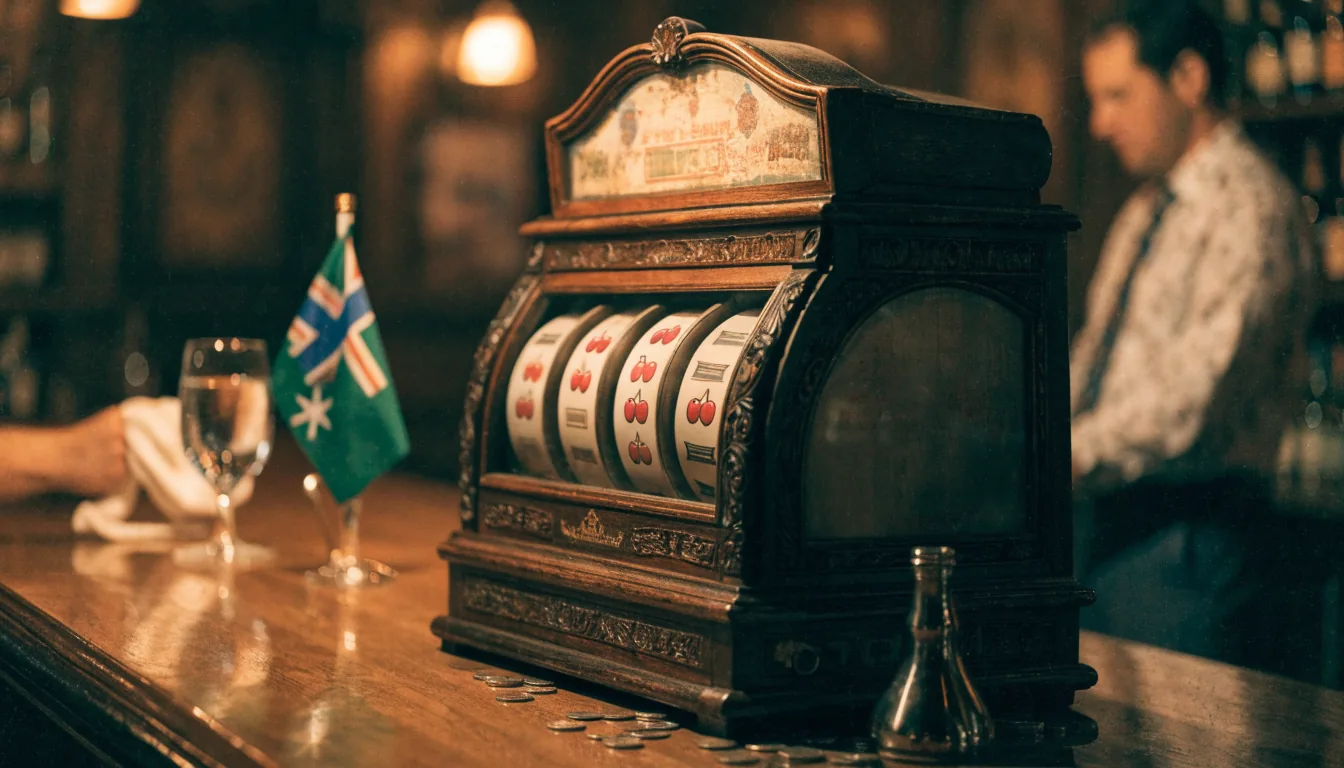
A five-reel pokie presents its result as a combination of symbols across reels, but the visible display should not be mistaken for a sequence of events that influences what comes next. The central mechanical principle is that each spin is a separate random event generated by a Random Number Generator (RNG). Its result does not depend on the spin before it, and it does not determine the result of the spin after it.
This independence is important because people naturally look for patterns in repeated outcomes. A run of similar results can seem meaningful, especially when the same symbols appear several times in succession or when a particular result has not appeared for a while. Under the RNG model, however, neither observation changes the status of the next spin. A result is not made more likely simply because it has been absent, nor is it made less likely because it appeared recently.
The same reasoning applies to wins and losses. A previous win does not create a continuing sequence that guarantees another win; a previous loss does not create a debt that the game must repay. Each new spin is evaluated as its own random event. This does not mean that all possible outcomes must occur in a short session, or that outcomes will be evenly distributed over a limited number of spins. Random sequences can contain clusters and gaps. Those features are compatible with independent events rather than evidence that one result has caused another.
Choosing a reel slots site in Australia is about finding an option whose available details fit your priorities. This list gives you a concise starting point for reviewing the operators featured for 2026.
Roby Casino
Roby Casino is listed with a Curacao eGaming license held by Roby Games Ltd. That licensing detail is the key confirmed point for considering it.
7Bit Casino
7Bit Casino is operated by Dama N.V. and is listed with a Curacao license. These are the confirmed details available for this operator.
WinSpirit Casino
WinSpirit Casino is listed under Curacao eGaming license OGL/2024/923/0383, issued by Antillephone N.V. Its stated minimum deposit is A$30.
SkyCrown
SkyCrown is listed with a Tobique Gaming Commission license. Its stated payout timing is around 10–15 minutes for crypto and 1–5 days for fiat, with a minimum deposit of A$30.
JustCasino
JustCasino is listed with a Curacao Gaming Control Board license. No other operator details are provided here.
Golden Pokies
Golden Pokies is listed with a Curacao license. This licensing information is the confirmed detail available for it.
LuckyVibe
LuckyVibe is listed with Curacao Gaming Control Board license OGL/2023/176/0095, held by Hollycorn N.V. The licensing details are the confirmed information provided for this operator.
Thor Casino
Thor Casino is listed with a Curacao license from Antillephone N.V. (Versus Odds B.V.). Its stated minimum deposit is EUR 20.
DragonSlots Casino
DragonSlots Casino is listed with a Curacao Gaming Authority license, with Jumpman Gaming Ltd named in connection with it. No further attributes are provided.
Vegaz Casino
Vegaz Casino is listed with Curacao license OGL/2024/1335/0780. Its stated minimum deposit is EUR 20.
An RNG is the mechanism associated with producing the random result for a spin. In an online pokie, the symbols shown on the screen are the game’s presentation of that result. The animation may make the reels appear to turn and stop in sequence, but that visual order should not be read as evidence that earlier spins, or the apparent stopping of one reel, determine the next outcome. The relevant point is the independence of one spin from another.
This description concerns the game’s result, not a promise about any particular session. Randomness does not imply that a player will encounter a representative spread of outcomes over a small number of spins. A short sequence can look unusually favourable or unfavourable without changing the underlying principle. The result of each individual spin remains separate from the results around it.
The term “five-reel” describes the format being considered, while the RNG principle applies more broadly to online pokies. The number of reels does not make one spin a continuation of another. Whether a game is described as a five-reel slot, a five-reel slot machine, or a five-reel casino game, the relevant mechanical idea remains the same: the displayed result is generated for each spin independently.
That distinction also helps separate the appearance of a game from its probability model. Reels, symbols and animations provide a way to show an outcome, but they do not establish that a particular result is due after a sequence of other results. A screen that seems to show a near match, for instance, does not alter the independence of the next spin. The next event is not a correction of the previous display.
Knowing that spins are independent does not make future outcomes predictable. It instead limits what can reasonably be inferred from the past. A history of results can describe what has already occurred, but it cannot, by itself, show that a different outcome is now more likely. Any claim that a machine is “due” based solely on recent results conflicts with the independent-event model.
Nor does independence mean that every outcome has identical odds. The stated principle is about the relationship between successive spins: one does not depend on another. It does not establish the probability of any particular symbol combination, and it does not mean that every possible combination is equally likely. Those questions require information about the game’s configuration and rules, rather than a reading of a short sequence of results.
Online pokies also have theoretical RTP percentages. That is a separate way of describing a game’s statistical behaviour over a very large number of spins; it does not predict the result of an individual spin. A theoretical measure and the RNG model therefore answer different questions. Independence explains why one result does not dictate the next, while an RTP figure concerns expected performance across an extensive run of play.
This framework applies whether a five-reel game is encountered in a digital casino setting or is being considered as a classic-style title. The format may affect how the game looks, but the result-generation principle remains separate from its visual style. Likewise, labelling a game as free-play does not, on its own, change what the RNG principle means. The defining point is still that each spin is a distinct random event, not a step in a sequence that can be forecast from previous results.
In practical terms, a string of outcomes should be treated as a record, not as a signal. It may describe the recent run, but it cannot establish what the next spin will produce. The RNG model offers a clear account of that limit: outcomes occur independently, and past results provide no basis for assuming that the next one is due to follow a particular pattern.
Return to player, usually shortened to RTP, is a theoretical measure of how a slot is expected to perform across a very large body of play. The calculation may cover millions of spins, so it describes a long-run pattern rather than the result of a particular session. It is not a forecast of what an individual will receive, nor does it set a minimum return for any player.
An RTP percentage expresses the theoretical share of stakes returned as prizes over that extended period. A higher figure indicates a higher expected return over time than a lower figure, when the figures are compared on a like-for-like basis. That comparison is useful for understanding a game’s stated mathematics, but it does not establish what will happen over a shorter stretch of play. Individual outcomes can differ substantially from the theoretical result.
This distinction matters when assessing five-reel pokies. Reel count alone does not determine RTP: the number of reels says nothing about the proportion of stakes the game is modelled to return. A five-reel title may have a different RTP from another game with the same reel count. The relevant figure is the one stated for the particular game configuration, not an assumption based on its appearance or category.
The percentage is best treated as a comparison measure, not as a promise. It summarises expected performance across a vast number of spins, while an individual’s experience represents only a small part of that theoretical span. Even when a game has a relatively high RTP, the figure does not mean that a player will recover a corresponding share of their stakes in a session.
RTP also does not describe the timing or distribution of prizes. Two games with similar theoretical return figures may produce different patterns of wins, but RTP alone cannot show how often prizes occur or how large they may be. Those questions require other game information, and the RTP percentage should not be used as a substitute for it.
An RTP of 96% or higher is a commonly used screening benchmark to identify games with a stronger theoretical return than lower-RTP alternatives.
A commonly used screening benchmark is an RTP of 96% or higher. This can help identify games with a stronger theoretical return than lower-RTP alternatives, but it does not make a game suitable for every purpose or guarantee a favourable outcome. The figure remains a long-run calculation, not a practical assurance about short-term results.
The game’s rules or paytable are the usual places to find its RTP. These in-game materials provide a more relevant reference than a title’s name, reel layout or promotional description. The stated percentage should be read as part of the information for that specific game, since figures from one title should not be transferred to another.
If an RTP is not clearly visible in the rules or paytable, the percentage cannot be reliably inferred from the game’s presentation. A displayed figure should also be understood in context: it describes the modelled long-run return, not the result of a particular play period. The paytable may contain other information about prizes and rules, but those details do not change the meaning of RTP itself.
For comparisons, consistency is essential. Figures should refer to the same game and configuration; otherwise, a difference may reflect a different version rather than a meaningful comparison between titles. The percentage is one piece of technical information, not a ranking of overall quality. In particular, it cannot establish which game will produce a better result for an individual.
The most defensible interpretation is therefore narrow: RTP offers a theoretical basis for comparing expected long-run returns, while the paytable or game rules show the stated figure. It does not predict a session, guarantee repayment, or make the number of reels a guide to expected performance.
Sweet Bonanza is often encountered in searches for online pokies with a bonus round, but its reported return figure and feature descriptions should be treated as version-specific rather than universal. A specialist game review reports an RTP of 96.51% for one version. That figure is not evidence that every copy of the game uses the same configuration: the version made available can differ, and the displayed RTP may therefore be different.
This distinction matters because a title’s name alone does not identify its exact build. A lobby tile may show the game but, according to a specialist review, does not reveal which RTP configuration an operator has selected. The relevant figure is in the game’s own information panel or paytable. Those in-game details are more specific to the version being presented than a general figure repeated in a review or promotional listing.
The reported RTP is a theoretical measure, not a forecast for an individual session. It does not describe what a particular player will receive from a given number of spins, nor does it establish that a bonus feature will produce a return. Even where the displayed figure matches the one cited in a review, it remains a long-run statistical property of the configured game rather than a promise about results.
A specialist review describes a free-spin trigger involving four or more scatter symbols, which it says awards 10 free spins. This should be read as a description of the reviewed version, not as a guarantee that every operator’s build has identical rules. The game’s own information panel is the appropriate place to confirm how the scatter condition and award are specified in the version on offer.
Sweet Bonanza Multipliers
Triggering Free Spins
Four or more scatter symbols are required to award 10 free spins.
Generating Multipliers
Multiplier bombs appear randomly during the free spin round.
Calculating the Win
The values of the bombs appearing in a round are added together, and the combined multiplier is applied to a winning tumble.
The same review describes multiplier bombs appearing during free spins. In that account, the values of bombs appearing in a round are added together, and the combined multiplier is applied to a winning tumble. The distinction between the individual bomb values and their combined effect is central to understanding the described feature. It does not, by itself, indicate how often bombs appear or what result a free-spin round will produce.
These details concern a particular feature configuration, not a general rule for five-reel games. Bonus terminology can sound consistent across titles while referring to different triggers or award calculations. For Sweet Bonanza, the scatter count and the treatment of multiplier values should therefore be checked in the game information rather than inferred from the title or from descriptions of other pokies.
The figure of 96.51% is useful only with its qualification: it is a figure reported by a specialist review for a version, while other builds may display a different RTP. A review figure should not be treated as the configured return for every online version. The operator-selected build can affect which figure applies, and the lobby image does not settle that question.
The bonus rules and RTP answer different questions. The RTP expresses a theoretical return across a very large number of game rounds; the feature description explains a condition under which free spins may be awarded and how multipliers are handled within them. Neither establishes the outcome of a single spin or bonus round. A feature can be described accurately without implying that it improves the result of any individual session.
For a comparison of Sweet Bonanza versions, the useful checks are consequently specific: the RTP printed in the in-game panel, the stated scatter requirement, the number of free spins awarded, and the rule for combining multiplier bombs. If those details differ between versions, the difference should be understood as a configuration distinction rather than an error that can be resolved from the title alone. The information panel and paytable provide the version-level description; a general review can only report the build it examined.
This is also why a single headline RTP should not stand in for a complete account of the game. The cited 96.51% figure does not confirm that the same version is available everywhere, and it does not independently verify bonus rules. Conversely, a description of the scatter trigger or multiplier calculation does not establish the RTP. Each claim relates to a separate part of the game’s configuration and needs to be read on that basis.
“Classic” and “five-reel” describe different aspects of a slot’s presentation. Five-reel identifies the reel count; classic suggests a familiar or traditional style. The labels can appear together, but neither alone establishes how a particular game works. In particular, the word “classic” is not enough to confirm a specific set of symbols, paylines, bonus rules or other features.
That distinction matters when comparing a classic-style title with a newer game promoted around additional features. The contrast is one of presentation, not a reliable technical classification: the available information does not establish a universal definition of either style. A game’s title or category label therefore cannot substitute for its own rules and paytable when determining its mechanics.
The phrase “classic five-reel slot machine” can also refer to a physical machine, while “classic five-reel slots online” refers to digital games presented in that general style. The shared reel-count wording does not mean the formats operate identically in every respect. Nor does the online label establish that a digital game reproduces the precise mechanics of any particular physical machine. The relevant details depend on the individual game.
One technical point does apply broadly to online pokies: they use a Random Number Generator, and their RTP is a theoretical percentage. Those characteristics do not distinguish classic-style titles from feature-led ones. They describe the underlying basis of online slot outcomes and the long-run return measure, rather than the visual style or specific rules of a game. A classic label should not be read as evidence that results are predictable, or that the game behaves differently from other online pokies.
Searches for classic five-reel titles may also blur category and format. Some people may use “classic” to indicate a simpler or more traditional presentation; others may mean a game with five reels and no particular assumptions about its features. Without a confirmed definition attached to a specific title, those interpretations cannot be treated as equivalent. A broad category can help describe the intended style, but it does not provide a dependable account of the game’s actual configuration.
For the same reason, a comparison between classic-style and newer feature-led games should remain at the level of labels unless the individual rules are available. It would be unsupported to infer that every classic title shares particular mechanics, or that every newer title has the same kinds of additional features. The five-reel count provides a narrow descriptive fact; the style label provides a broader impression. Neither tells the full story of how a game is configured.
This leaves a restrained way to use the terminology: “classic” indicates a claimed style, while “five-reel” states a reel count. For online versions, the general technical basis is the RNG and theoretical RTP, not the category name. Specific mechanics require game-specific information rather than assumptions drawn from the label.
In Australia, the legal distinction is between the person playing and the operator providing the service. The Interactive Gambling Act 2001 prohibits operators from supplying real-money online casino games, including pokies, to people in Australia. It also bars Australian-licensed operators from offering these games online. The restriction covers online casino-style services such as slots, poker, blackjack and roulette; it is not a matter of finding a locally licensed casino that can legally provide them.
Individuals are not penalised simply for playing through an offshore site. That does not make offshore services lawful to offer in Australia, or place them under Australian consumer protections. A specialist review describes Sweet Bonanza as accessible to Australian players through offshore-licensed casinos, but that description should not be read as an indication that the game is available through a locally licensed real-money service. Offshore operators sit outside the Australian consumer-protection framework, and access can be disrupted by enforcement action.
Legal Restriction
The Interactive Gambling Act 2001 prohibits operators from supplying real-money online casino games, including pokies, to people in Australia.
The Australian Communications and Media Authority (ACMA) is the federal regulator responsible for enforcing the Act and monitoring compliance with interactive-gambling laws. It can ask internet service providers to block websites that offer prohibited gambling services or advertise them to Australians. This means that a site appearing accessible at one point is not evidence that it is authorised to serve the Australian market or will remain reachable.
ACMA’s published enforcement figures indicate the scale of these actions. Since November 2019, it has blocked more than 1,455 illegal gambling and affiliate websites following enforcement measures. Separate accounts differ on the number of illegal services that have withdrawn since enforcement began in 2017: one reports more than 210, while another gives a figure above 190. The figures should therefore be treated as conflicting reports, rather than combined into a single precise total.
For people searching for five-reel pokies involving real money, the legal setting matters more than the number of reels. A five-reel format does not alter the status of an online casino service under the Act. Nor does describing a game as free change the legal position of a real-money service; free-play arrangements are a separate subject. The relevant distinction here is whether an operator is providing prohibited online gambling to people in Australia.
The practical picture is therefore one of prohibition on operator provision, active blocking, and limited Australian protection where offshore services are involved. An offshore site’s presence, a game’s availability there, or a payment option offered by a site does not establish Australian authorisation. Any account of real-money access needs to be read against that legal and enforcement context, rather than as an endorsement or recommendation of a particular service.
A five-reel game described as free play combines two ideas: the format has five reels, while “free” refers to the way a session is presented rather than to the game’s reel count. The wording may also evoke a physical slot machine, but online pokies are digital games. These terms alone do not establish that a particular title has a free-play option or explain how such an option works.
The distinction matters because a game’s technical basis is separate from its payment conditions. Online pokies use random number generators (RNGs), and they have theoretical return-to-player (RTP) percentages. Those properties describe the game, not whether a session uses real money, whether a no-cost mode is available, or what conditions apply to it. A five-reel game does not become a different kind of game merely because it is encountered in a free-play context.
Likewise, “free” should not be treated as a precise description of every aspect of a session. The term does not, by itself, establish whether play is limited to demonstration, whether an account is required, whether access is temporary, or whether any other conditions apply. Such details depend on the specific game and service, and cannot be inferred from the phrase “free five-reel slot machine games.” The label alone is not evidence of a particular offer.
A free-play description also says nothing about likely outcomes. RNG-based results remain random; a no-cost setting, if one is offered, does not establish that a sequence of results predicts what may happen in a real-money session. Nor does the theoretical RTP percentage guarantee a particular return in any individual run. The figure is a property of the game’s theoretical performance, not a promise attached to a session.
Attention A no-cost setting does not establish that a sequence of results predicts what may happen in a real-money session.
The practical reading of “free games” in a five-reel context is therefore limited: it signals interest in playing without staking real money, but does not confirm that a particular game supplies that mode or define its terms. The reel format and the conditions of access are separate questions. Without details tied to a specific title and service, the phrase should not be taken as proof of availability, cost, or session rules.
A five-reel game may be described as browser-based or downloadable, but those labels do not establish that either format is available for a particular title. The distinction concerns how a game is accessed, not how its results are generated. Online pokies use a Random Number Generator (RNG), and their published RTP is a theoretical measure; neither feature indicates whether a game runs in a browser or requires an installed file.
Browser access generally refers to opening a game through a web page, while downloading implies installing software or a game file before use. These are useful distinctions when assessing a product description, but they should not be treated as confirmed options for every five-reel title. No general claim about availability follows from the game’s reel count, RNG, or RTP.
The same caution applies to wording that combines free play with browser access. “Free” can refer to the absence of a real-money stake, while “no download” describes access; one does not establish the other. A game could be described in one of these ways without the description confirming both. Nor does the presence of an online game establish that it can be played in a particular format.
For any named title, format information would need to be stated in the game’s own current materials or its access interface. A lobby image or short title description is not sufficient evidence of a downloadable edition, browser play, or a free mode. Those details can vary by provider or platform, and they should not be inferred from the way a game is marketed elsewhere.
This distinction matters because the technical properties of online pokies and their delivery method answer different questions. RNG describes how spin outcomes are produced; theoretical RTP describes expected performance over a very large number of spins. Neither specifies the software installation process. Consequently, a general description of five-reel online play cannot establish that a particular slot can be downloaded or launched without a download.
Interest in playing a five-reel pokie without staking real money is distinct from interest in how the game works. The phrase “free play” may suggest a version that can be tried without a cash stake, but the wording alone does not establish that such a version exists for a particular title. Nor does it specify how access would work or what conditions might apply.
That distinction matters because claims about a game’s mechanics are not evidence of a free-play option. Online pokies use random number generators, and they have theoretical return-to-player percentages. Those characteristics describe how results are generated and how returns are modelled over many spins; they do not indicate whether a game can be opened without wagering real money.
Likewise, the presence of a five-reel layout says nothing by itself about the availability of free play. Reel count identifies a feature of the game’s presentation, not its access terms. A title can be discussed in relation to its reels or random results without that discussion confirming a practice mode, a trial, or any other no-stake format.
The word “free” can also be ambiguous. It might refer to access without a cash stake, or it could be used loosely in promotional language. Without clear information about the specific game and the conditions attached to an offer, those meanings cannot be treated as interchangeable. A free-play claim should not be read as evidence about cash play, the game’s theoretical RTP, or the likelihood of a particular result.
For five-reel pokies, the verifiable technical point remains narrow: online versions use random number generators and are associated with theoretical RTP figures. Neither fact confirms a free version or its terms. Accordingly, the existence of a free option has to be established separately for the particular title and context; it cannot be inferred from the game category or from general descriptions of online pokies.
Online pokies share two relevant technical characteristics: their results are generated through random number generators, and their return to player is expressed as a theoretical percentage. These features describe the underlying model, not a promise about what any individual session will produce.
A five-reel format identifies the visible arrangement of a game, but the label alone does not establish how often a particular result will occur or what a player will receive. The RNG determines outcomes, while the theoretical RTP describes expected performance across a very large number of spins. It is therefore a long-run statistical measure, not a forecast for a single spin or a short sequence.
This distinction matters when comparing online games. The reel count does not, by itself, indicate whether one title has a higher theoretical return than another. Nor does an RTP figure establish that a particular player will recover a corresponding share of their stake. Individual results can vary because each spin is random; the percentage describes the model over extensive play.
Accordingly, the shared technical basis of online five-reel pokies is narrower than a ranking of games: RNG-generated outcomes and a theoretical RTP measure. Those two characteristics provide a framework for understanding how online results are represented, but they do not identify a universally preferable title or predict session outcomes.
“Five reels” can describe a count, while “five-reel slot” can function as a category label. In ordinary use, however, the two expressions may point to the same basic idea: a slot described as having five reels. The wording alone does not establish a separate type of game or a different way of determining results.
That distinction matters when interpreting a title or description. A count is a statement about the number of reels; a category label groups a game under a familiar name. Without further information about a particular game, there is no basis for treating those phrases as evidence of different rules or outcomes. Nor does the label by itself establish other details of play.
The relevant shared fact is that each spin is generated independently. A slot uses a Random Number Generator, and the result of one spin does not depend on the result before or after it. Calling a game a five-reel slot does not alter that principle.
The safest reading is therefore a modest one: the phrase may refer to the number of reels, or use that number as a convenient description of the slot category. Any more specific interpretation would depend on information about the individual game, rather than on the wording alone.
Australian-licensed operators cannot offer online pokies, including Sweet Bonanza. Individuals are not penalised for playing at offshore sites, but those operators are outside Australian consumer protection and the ACMA can block their websites.
RTP is a theoretical percentage calculated over a very large number of spins, often millions. It represents the share of stakes expected to be returned as prizes over that long run, not the return from an individual session.
RTP is calculated as a theoretical percentage of stakes expected to be paid back as prizes across a vast number of spins, often millions. It does not predict what a player will receive in a particular session.
RTP helps compare a slot’s theoretical long-term returns: a higher figure indicates a better expected return over time than a lower one. Check the game’s rules or paytable for its RTP, and look for slots at 96% or higher.